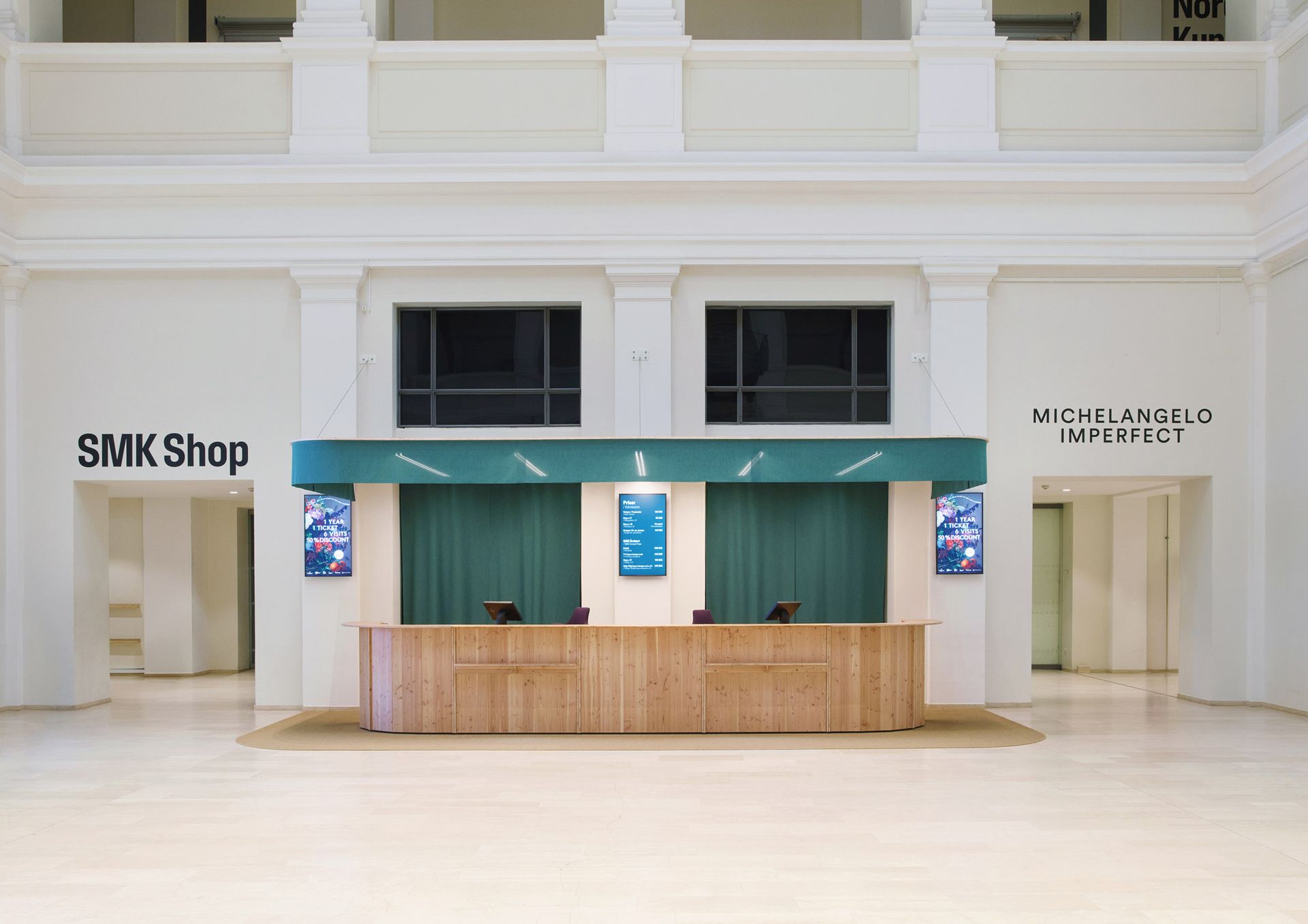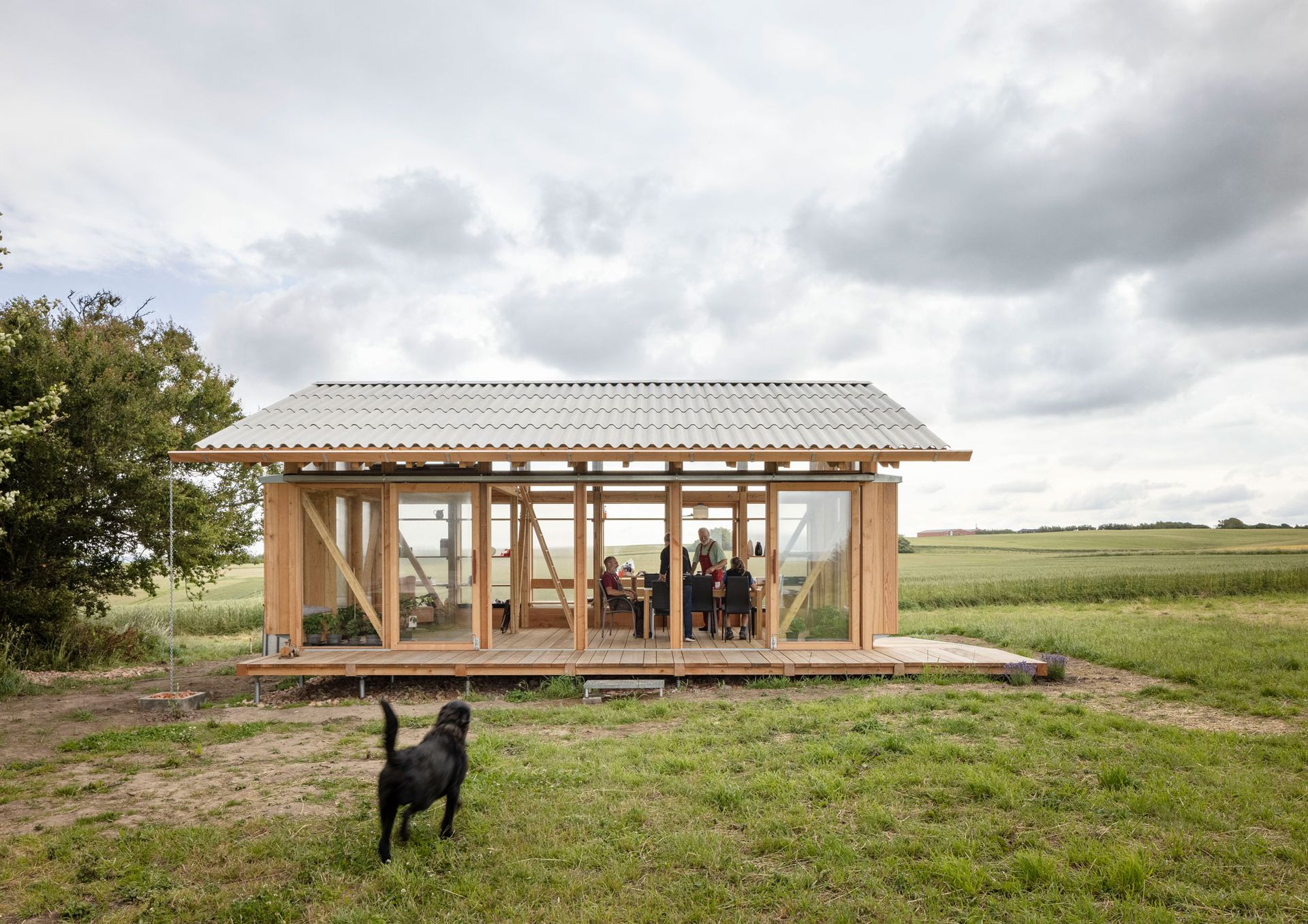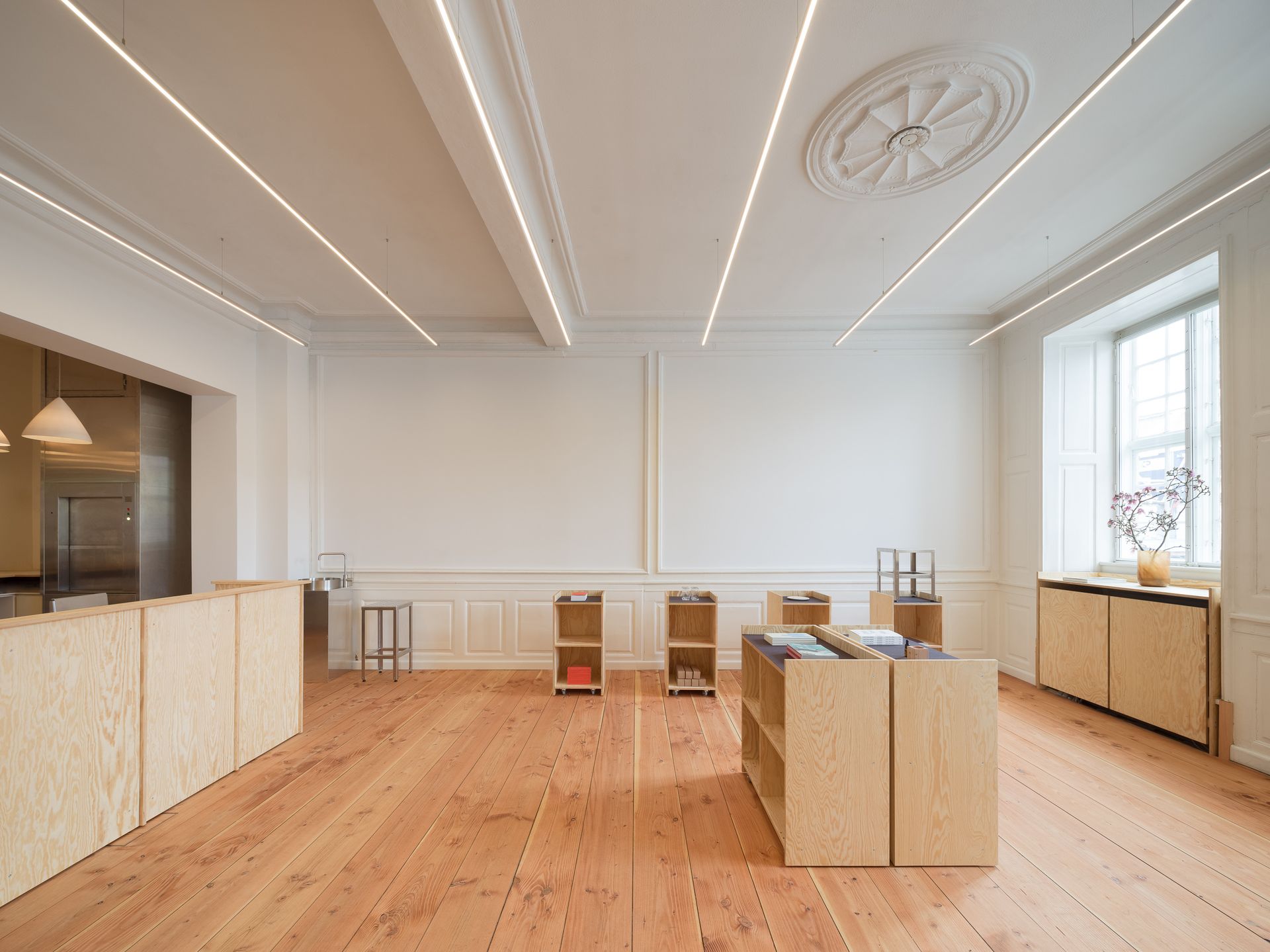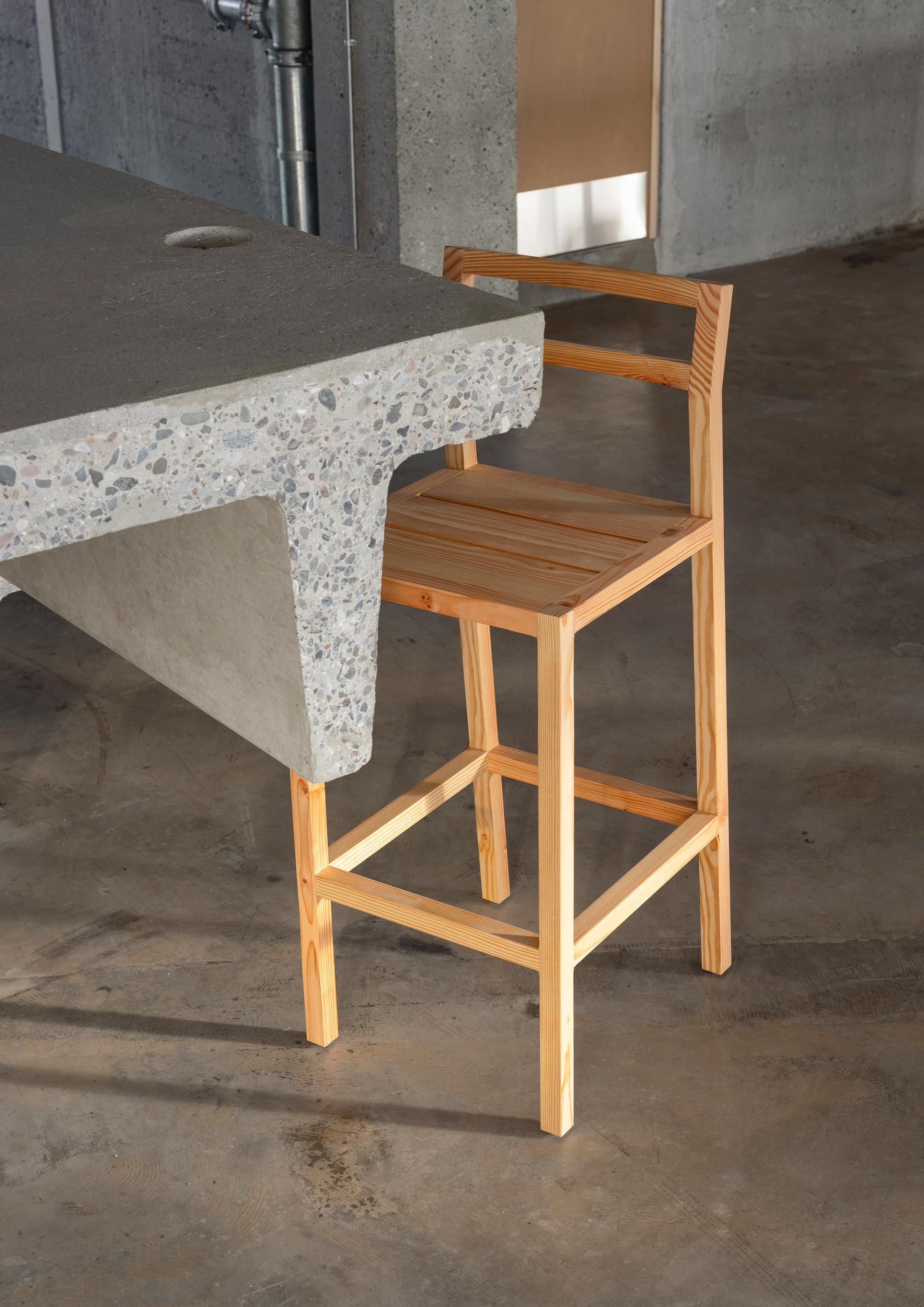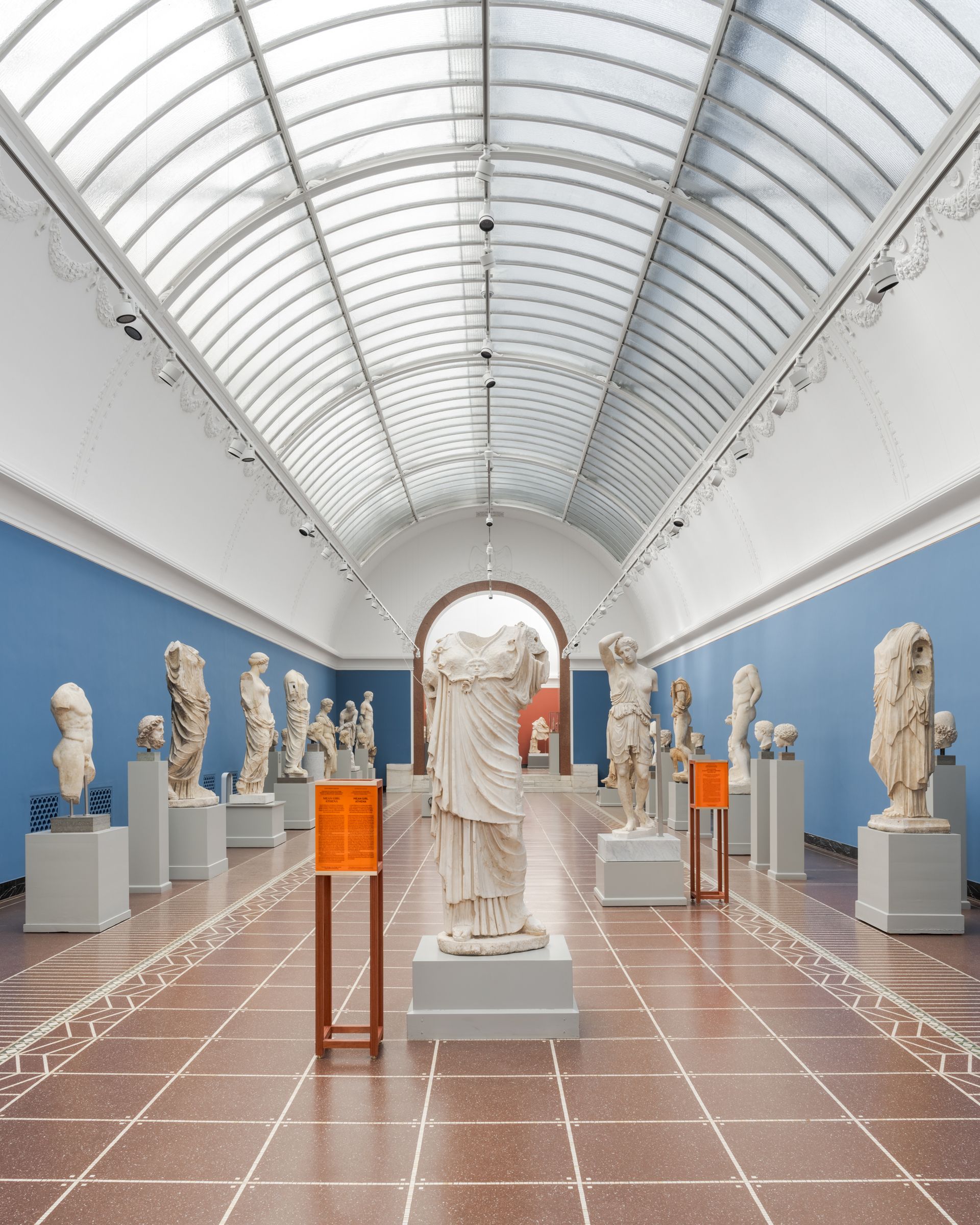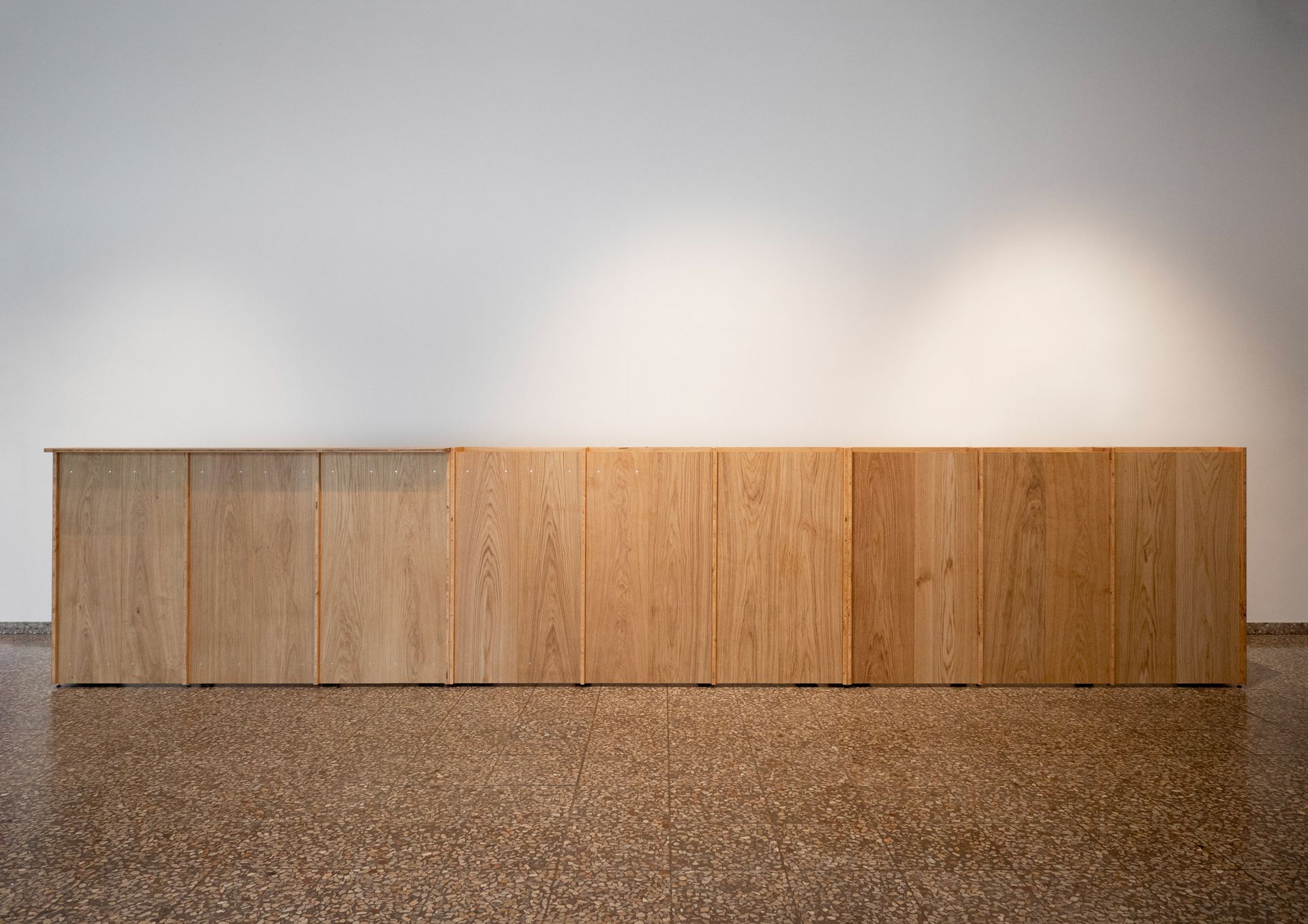
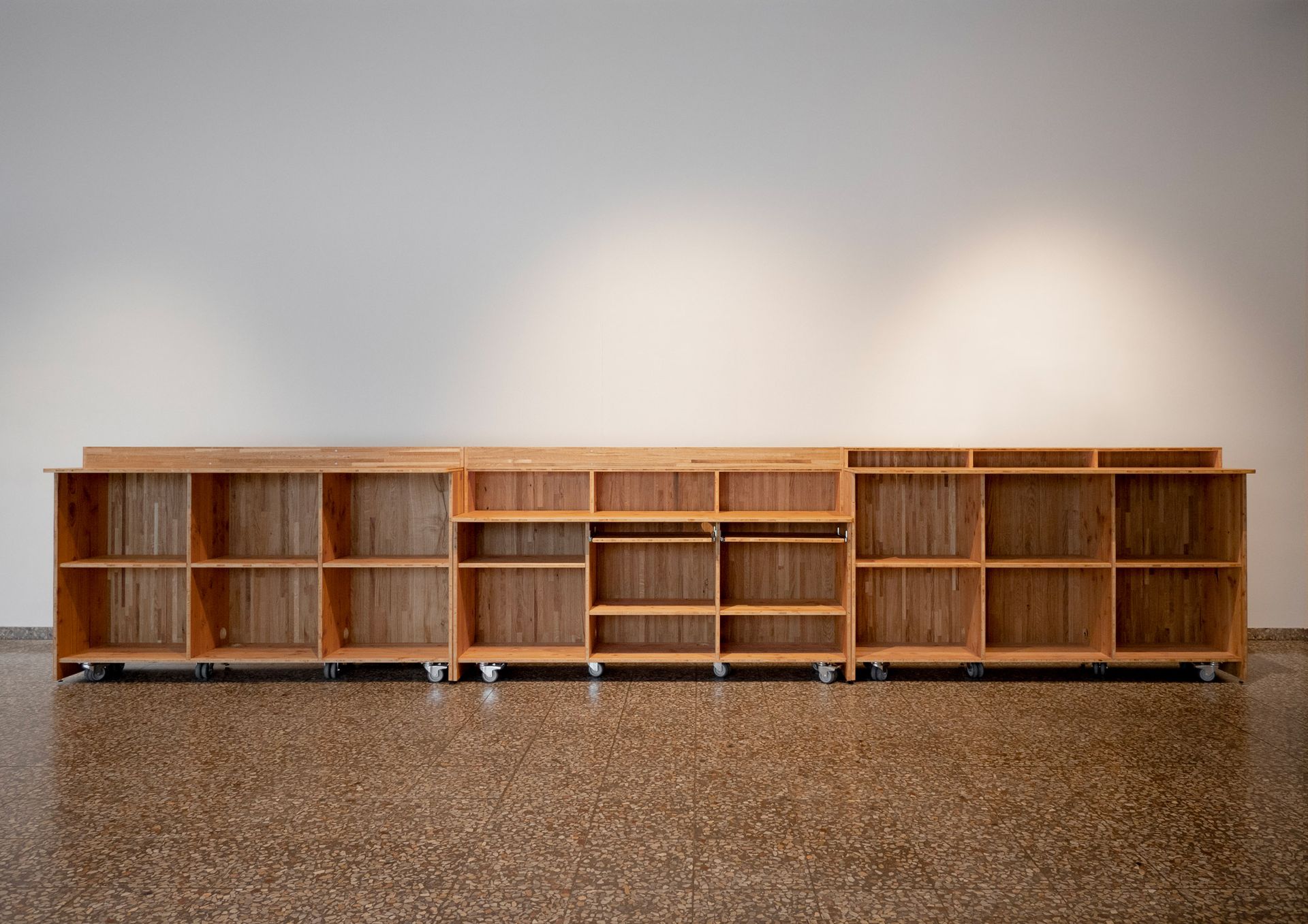
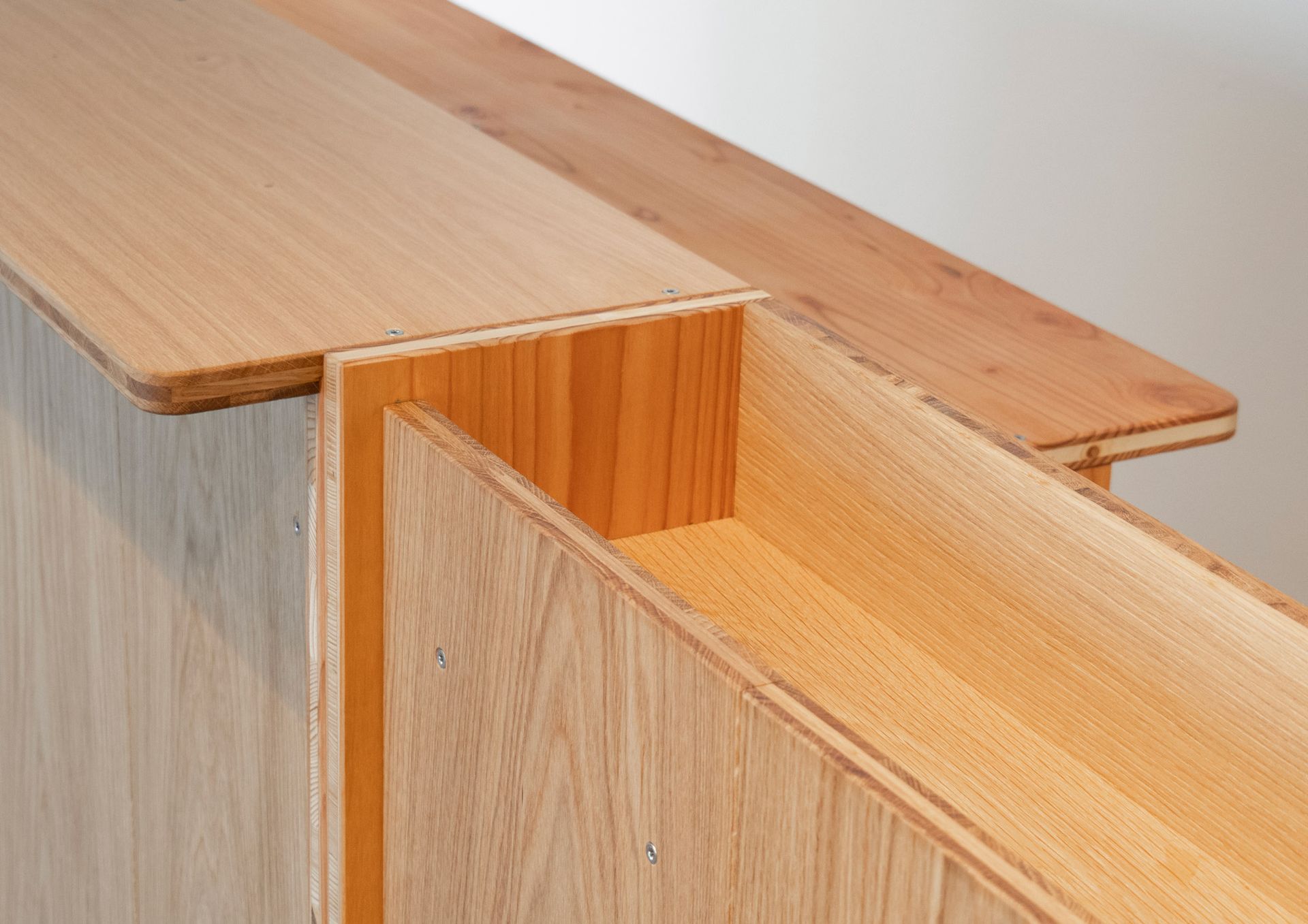
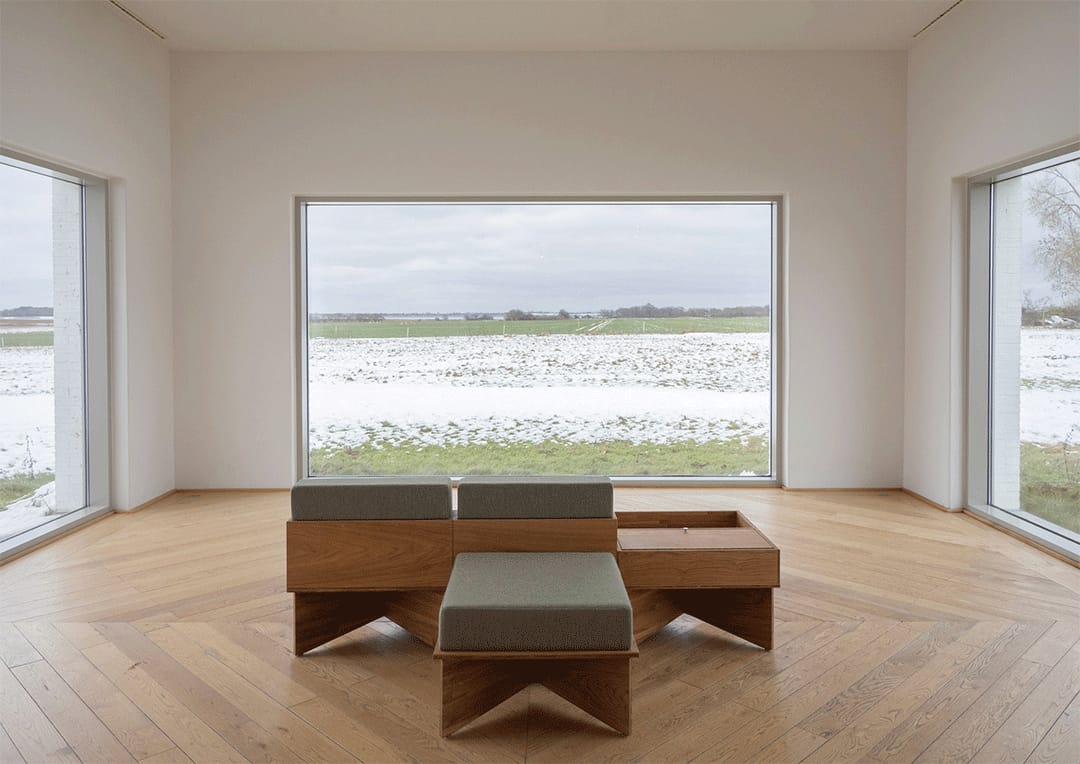
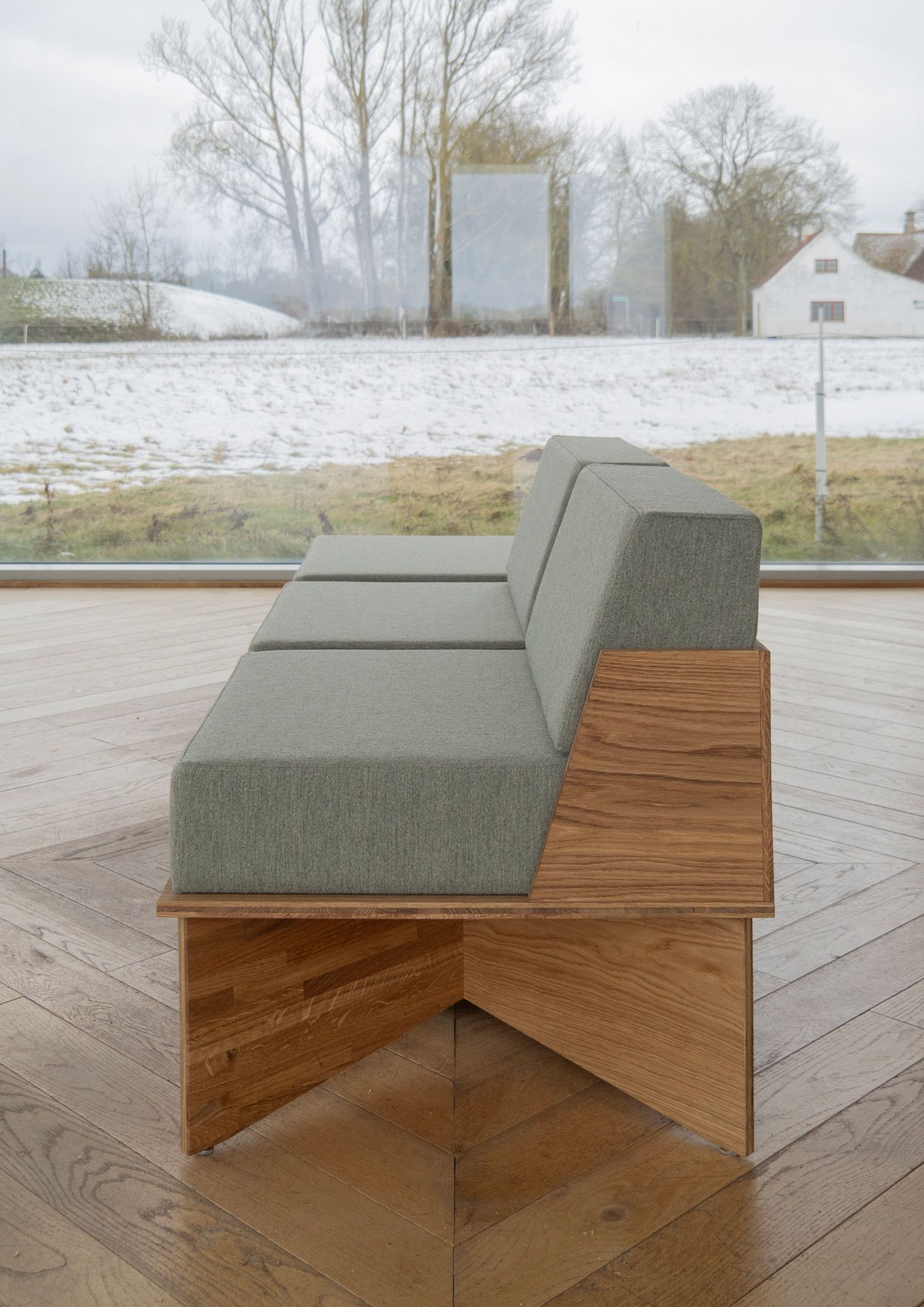
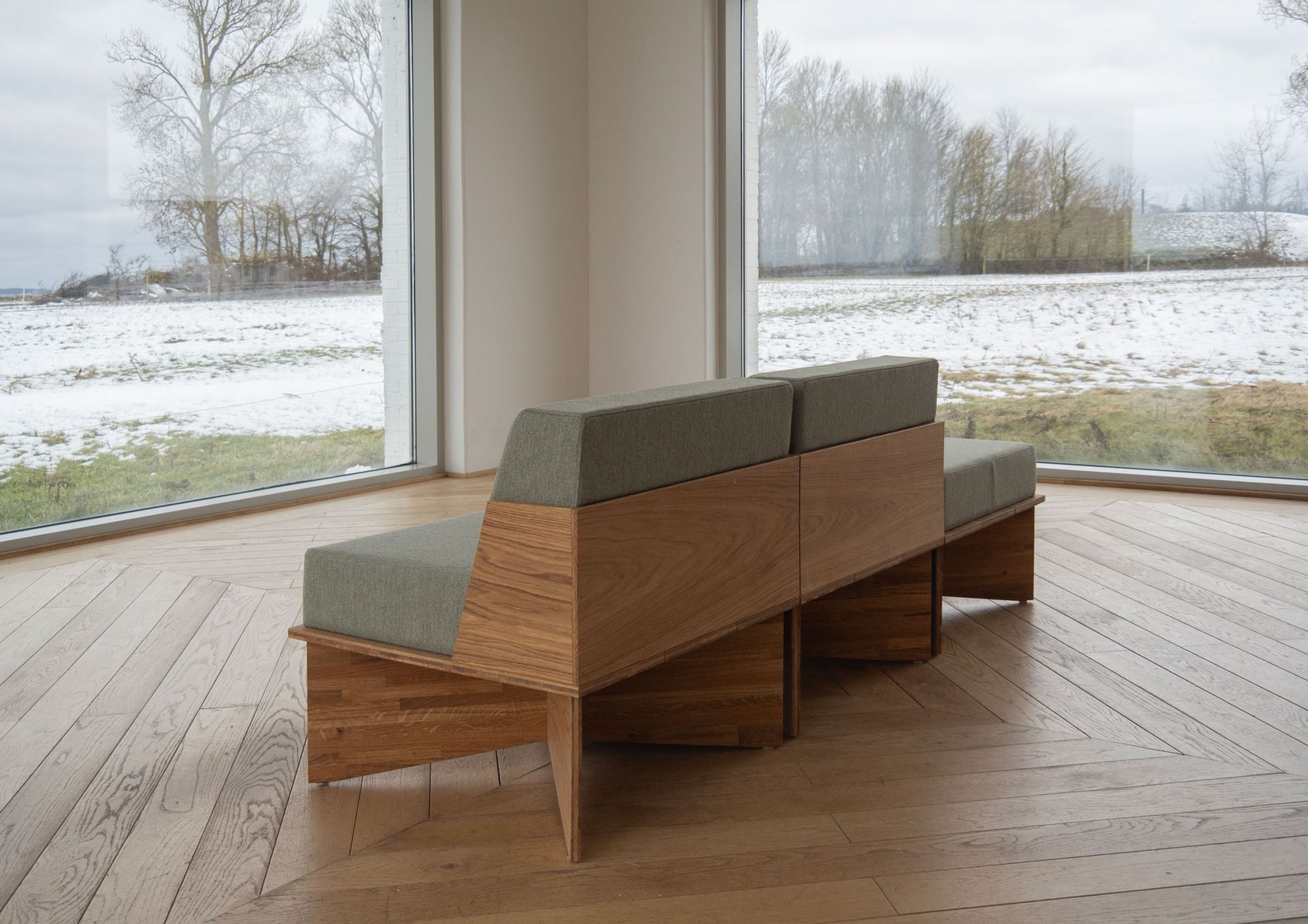
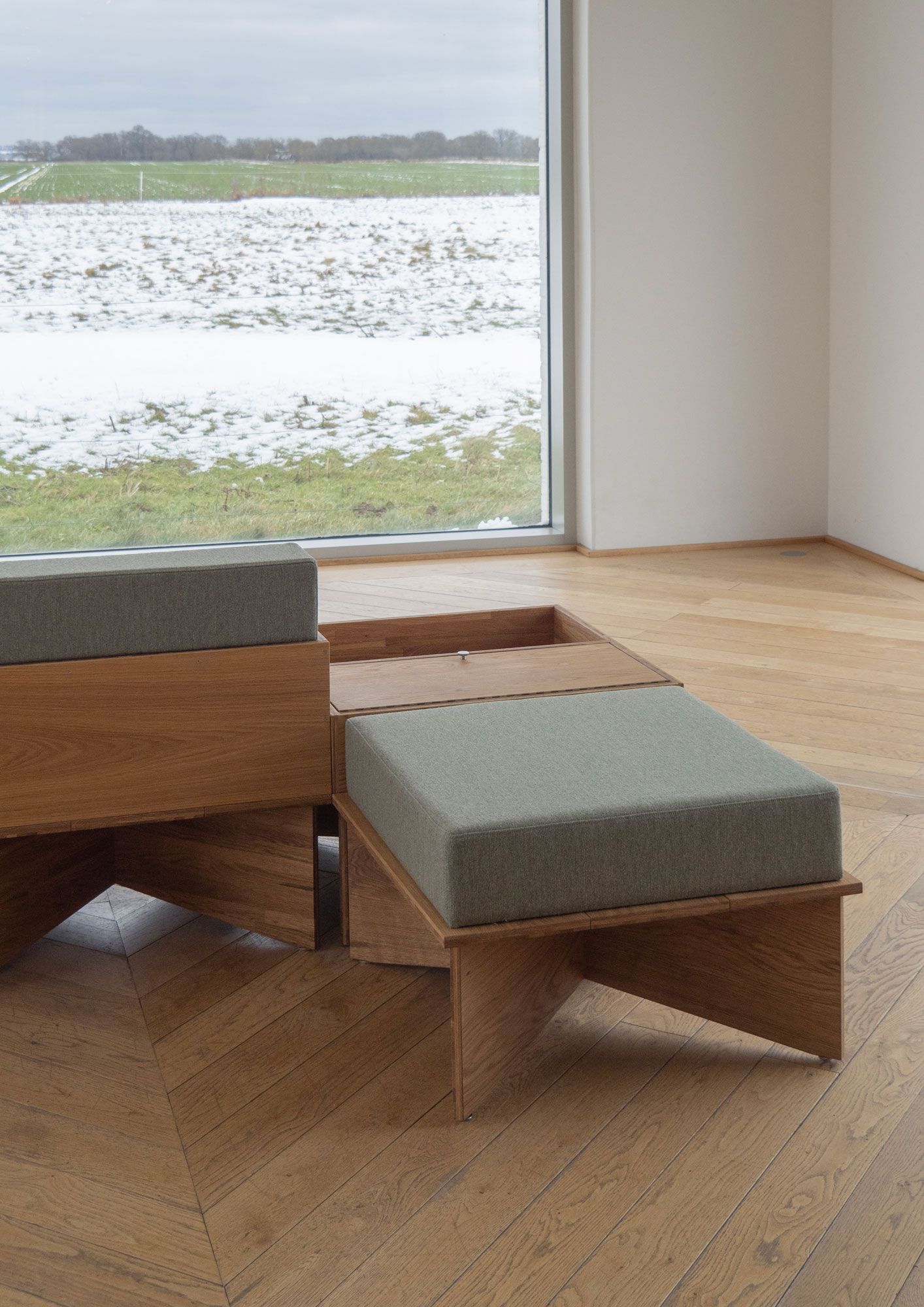
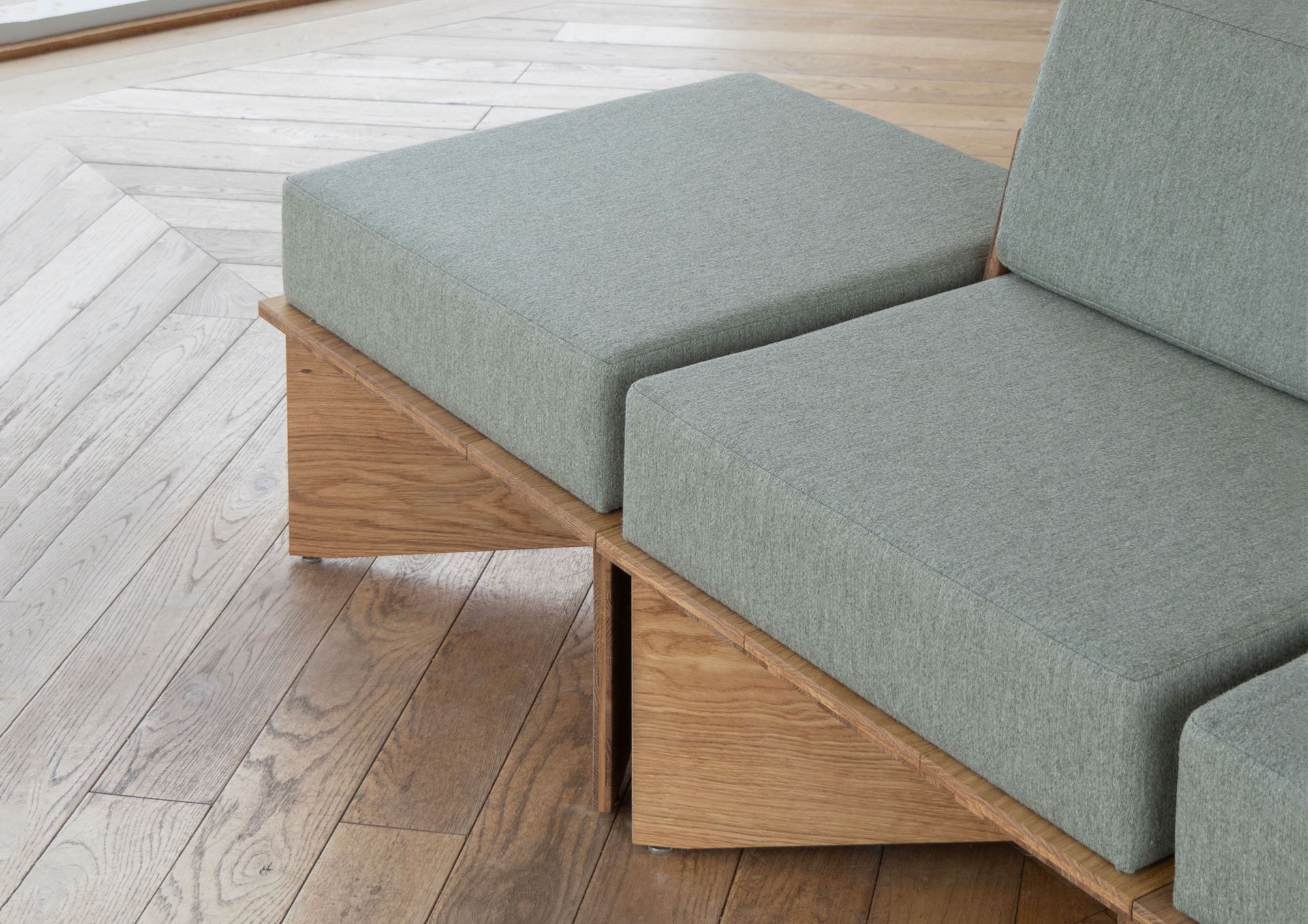
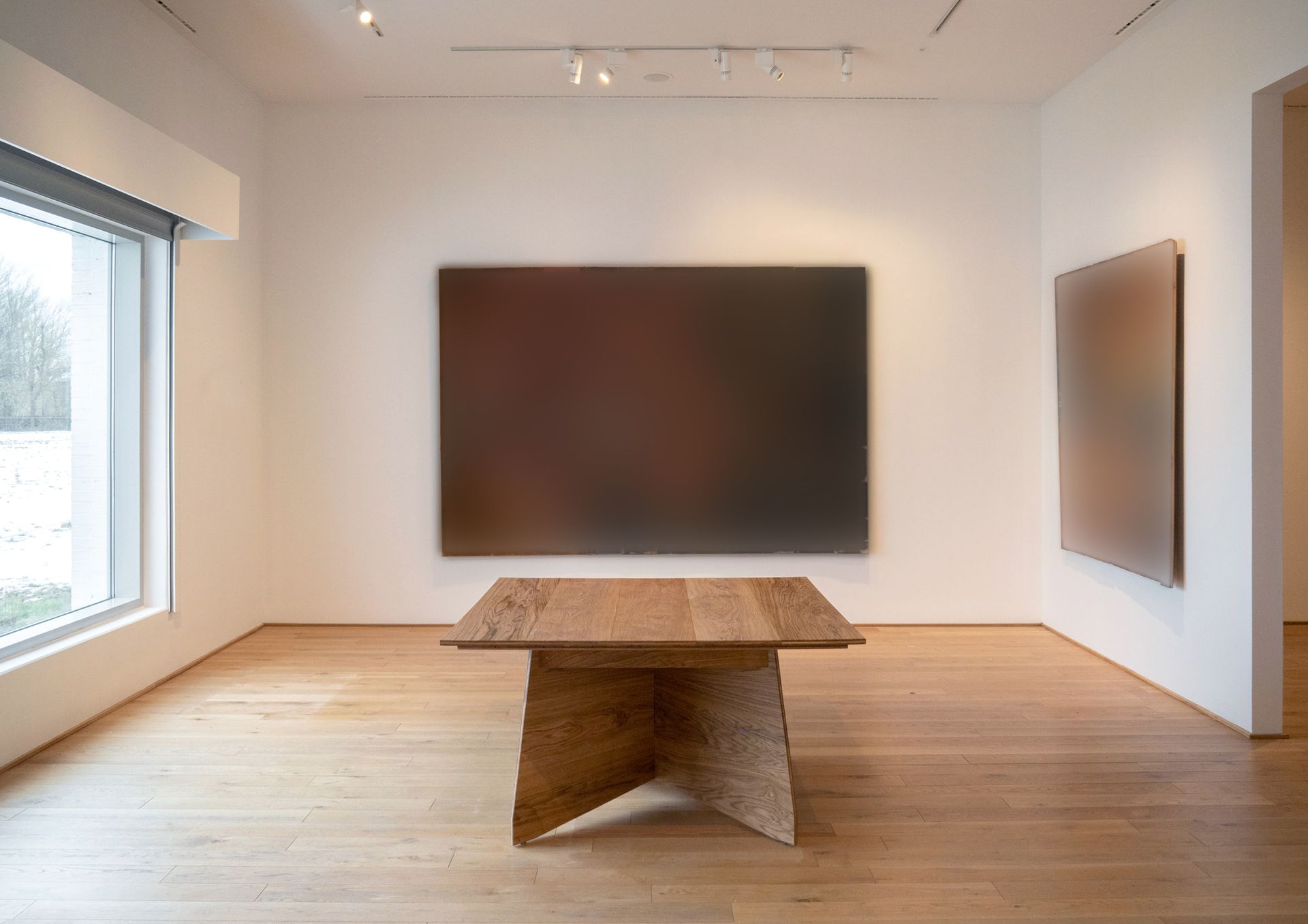
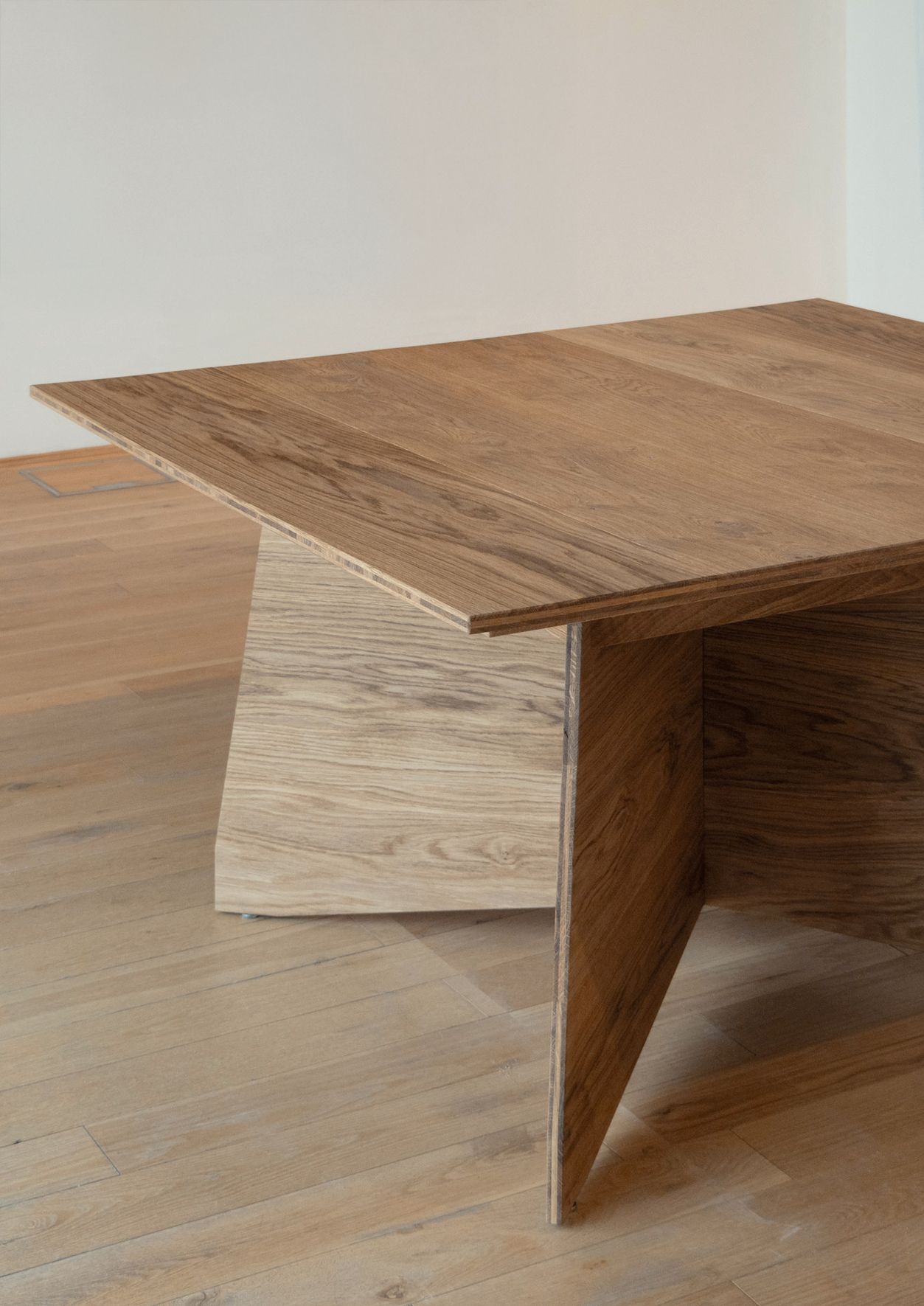
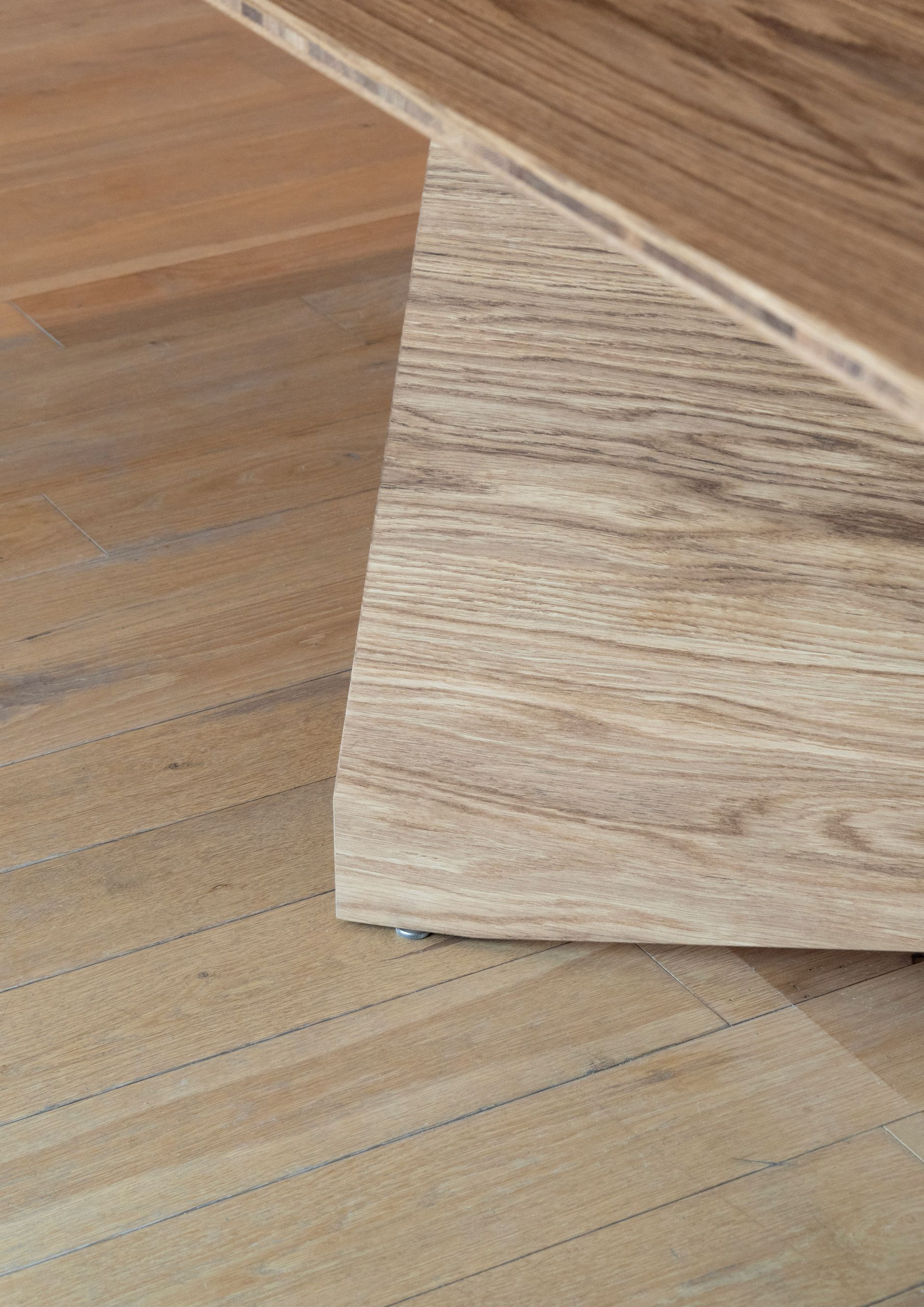
Archival was commissioned to design a series of furniture pieces for Fuglsang Kunstmuseum on Lolland, developed in close collaboration with spatial designer Stine Friese. The collection comprises a large communal table, a reception desk, and a modular seating and storage system conceived specifically for the museum's gallery rooms. The form language of the furniture takes its cue directly from the museum's architecture by Tony Fretton Architects. Floor patterns and the overhead skylights with 45° grid correspondence to the walls informed a vocabulary that is rooted in its context. Textile colors were drawn from the melancholic landscape of Lolland, connecting the furniture to the natural surroundings of the museum. At the core of the collection is a modular system built around a single square unit. From this, a range of configurations emerge: upholstered seats, with and without backrest in two colors, a storage unit with a removable cable box, and one with a cabinet door – each resolved within the same aforementioned room geometry. The system's coherence lies in its simplicity: one shape, many uses. The timber was sourced as second-grade wood from Dinesen as a material that carries the natural irregularities of its origin: curvatures, grain variation, and character that standardized production processes would reject. Upholstery was produced by AP Møbelpolstring in Denmark, with textiles woven at Kjellerup Væveri. All pieces were produced inhouse. The furniture was designed to last and to be remade. The modular approach mean that individual components can be replaced, repaired, or reconfigured over time to resists obsolescence.