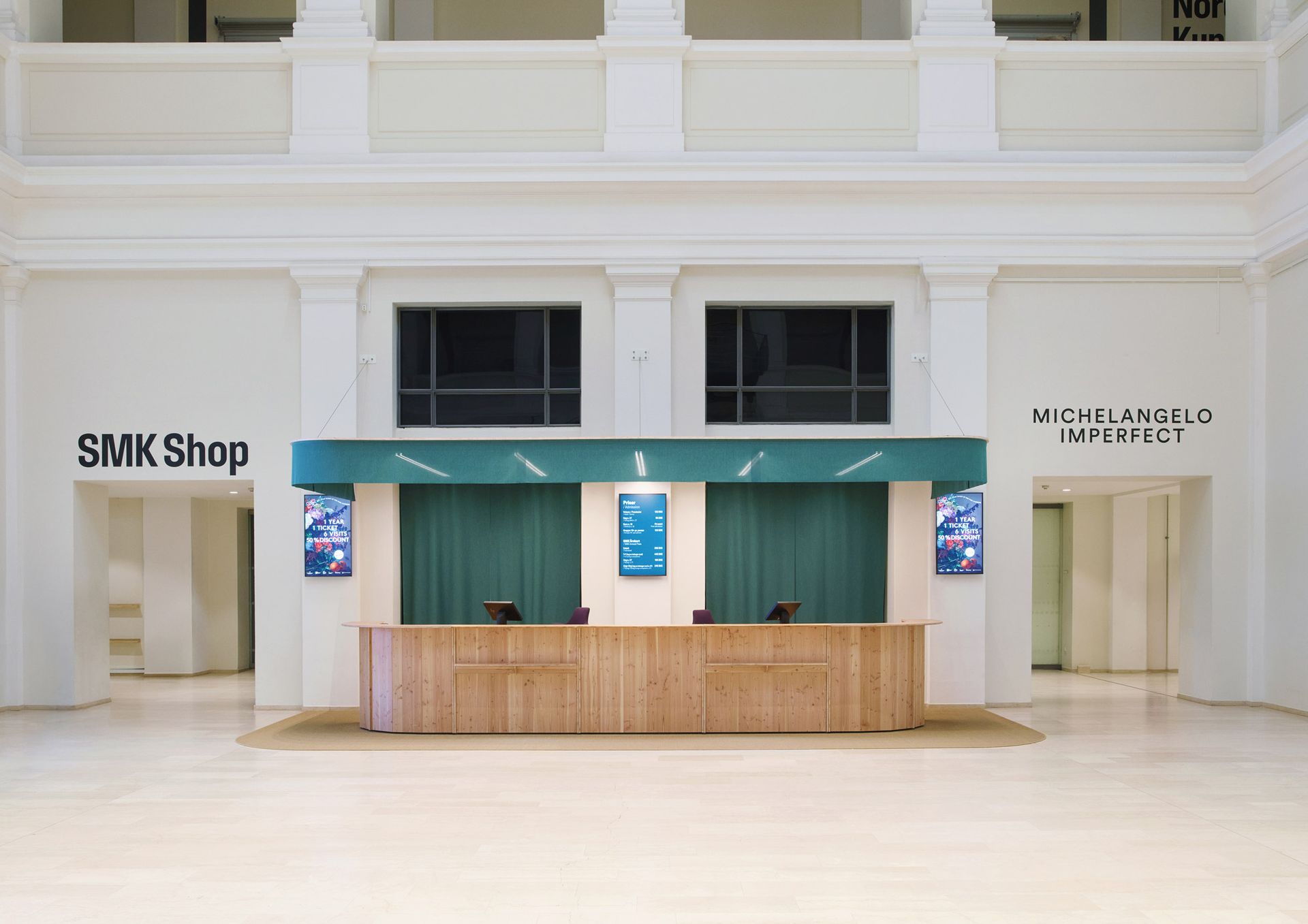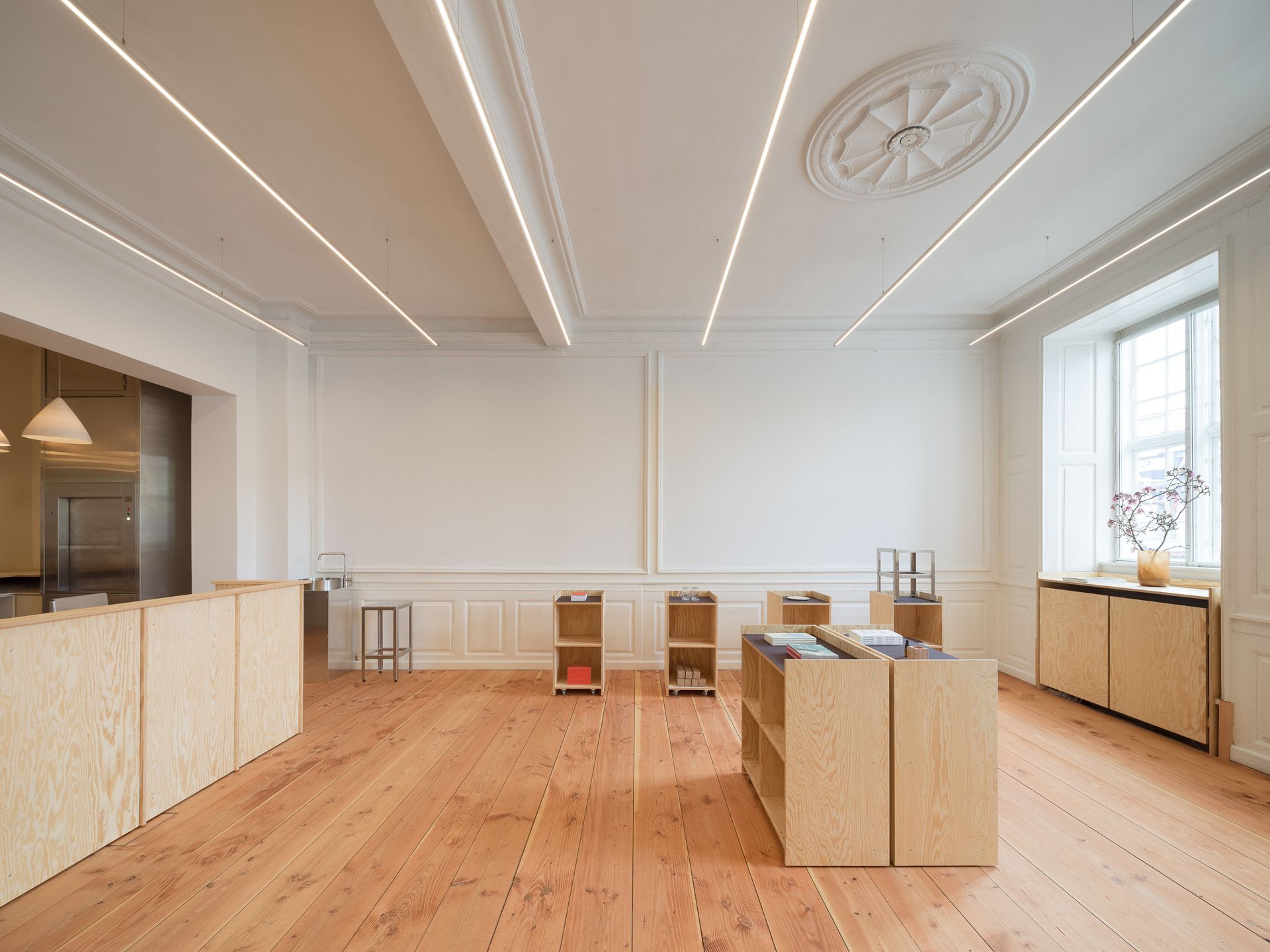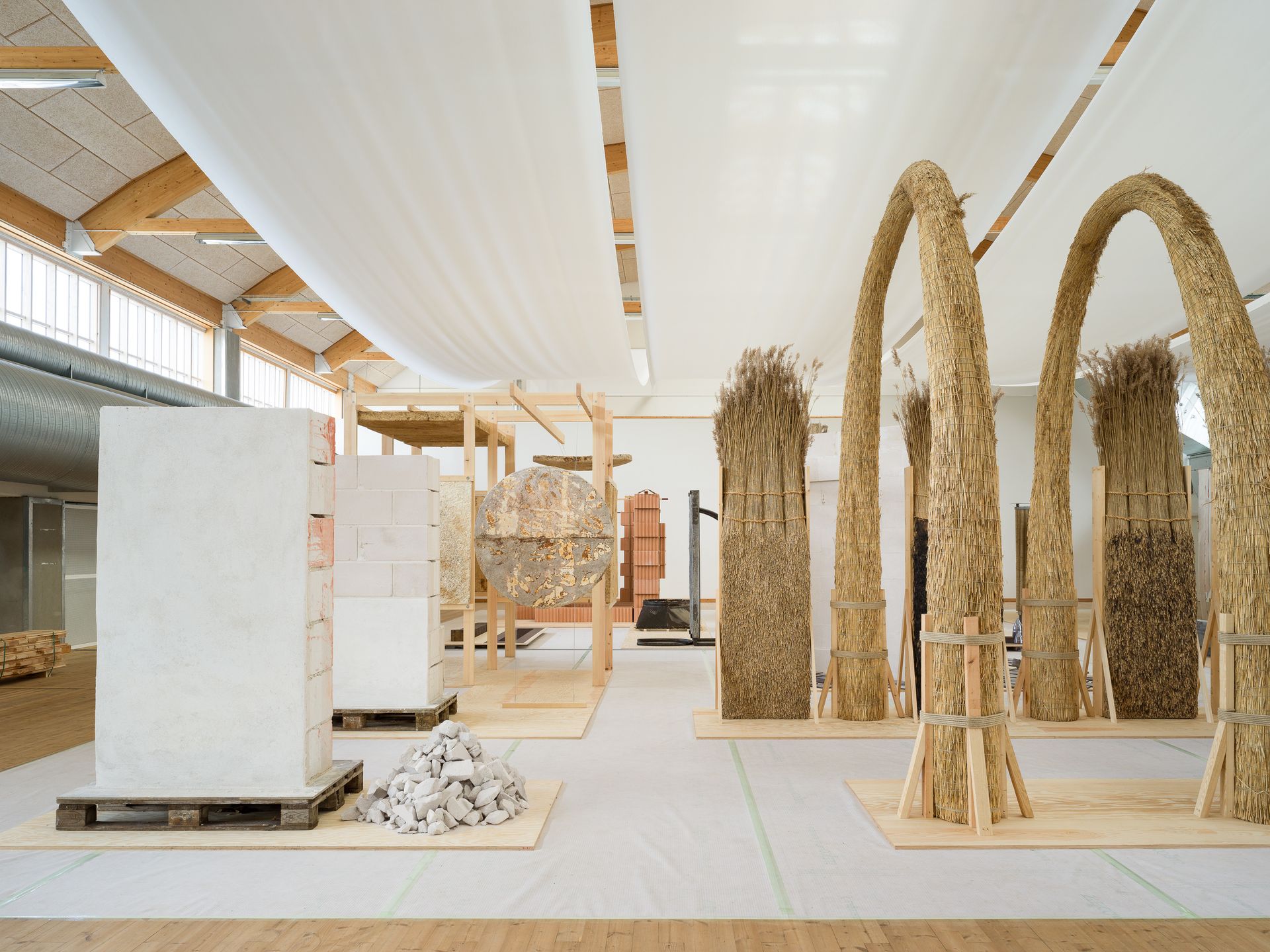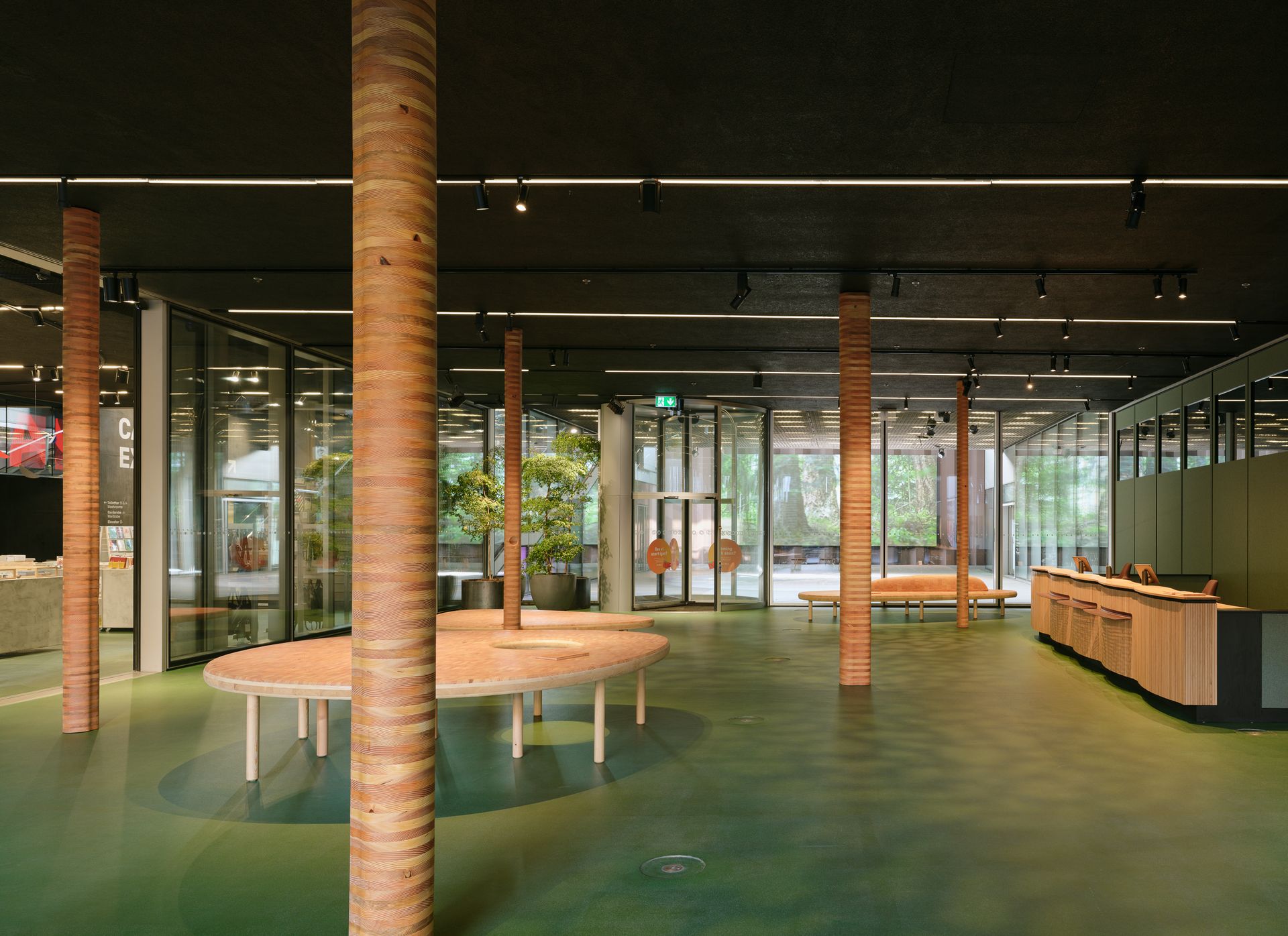
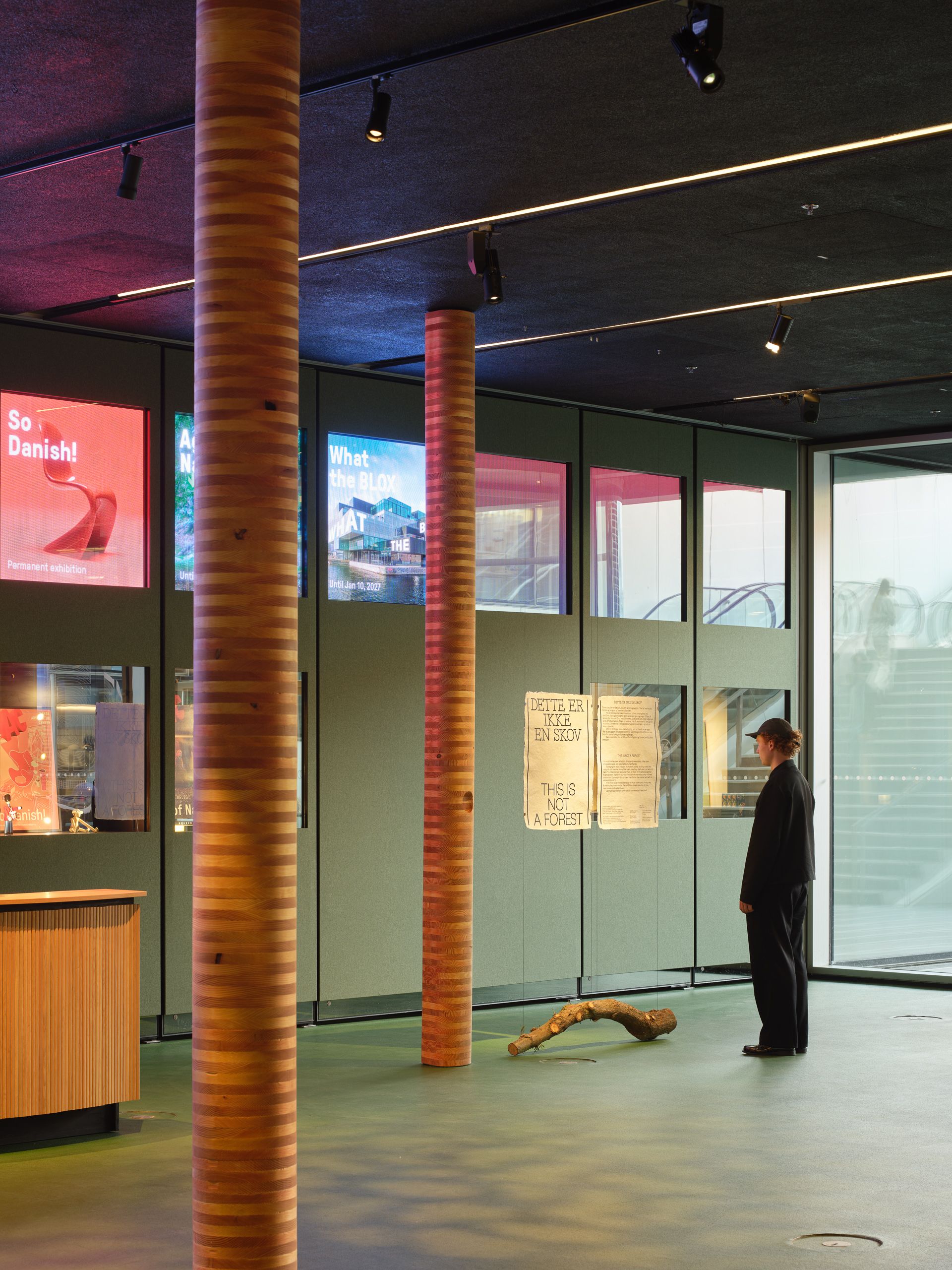
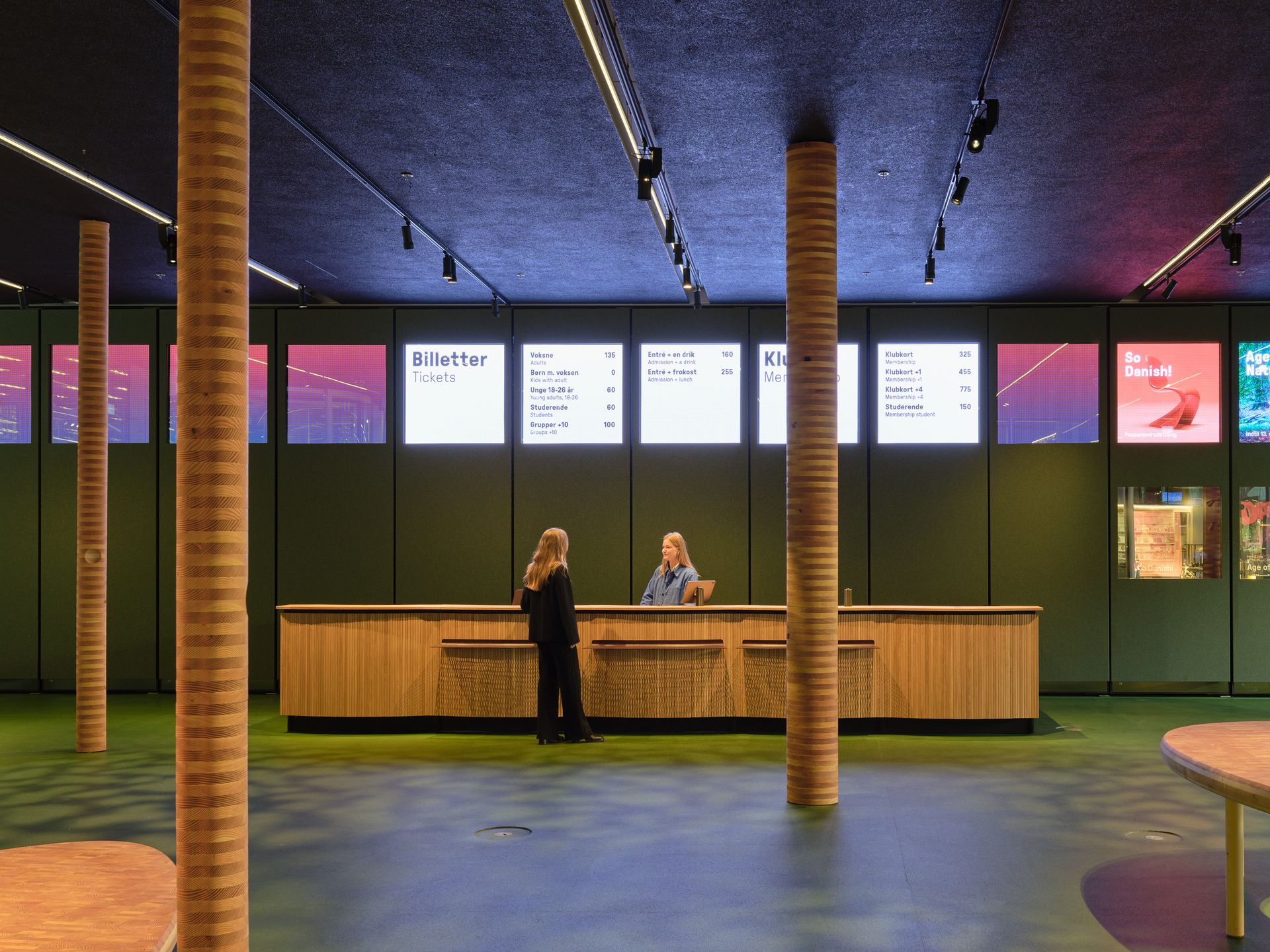
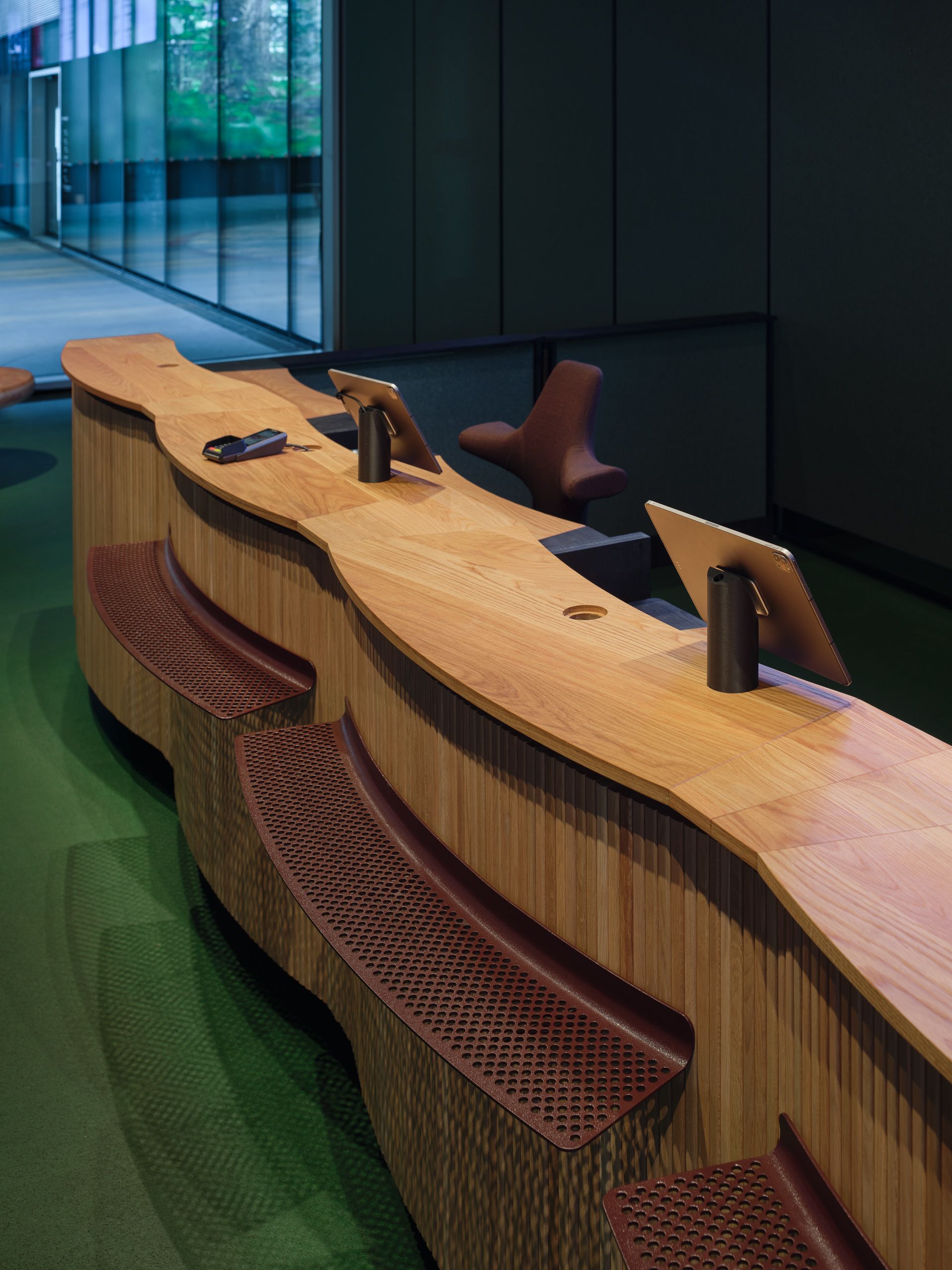
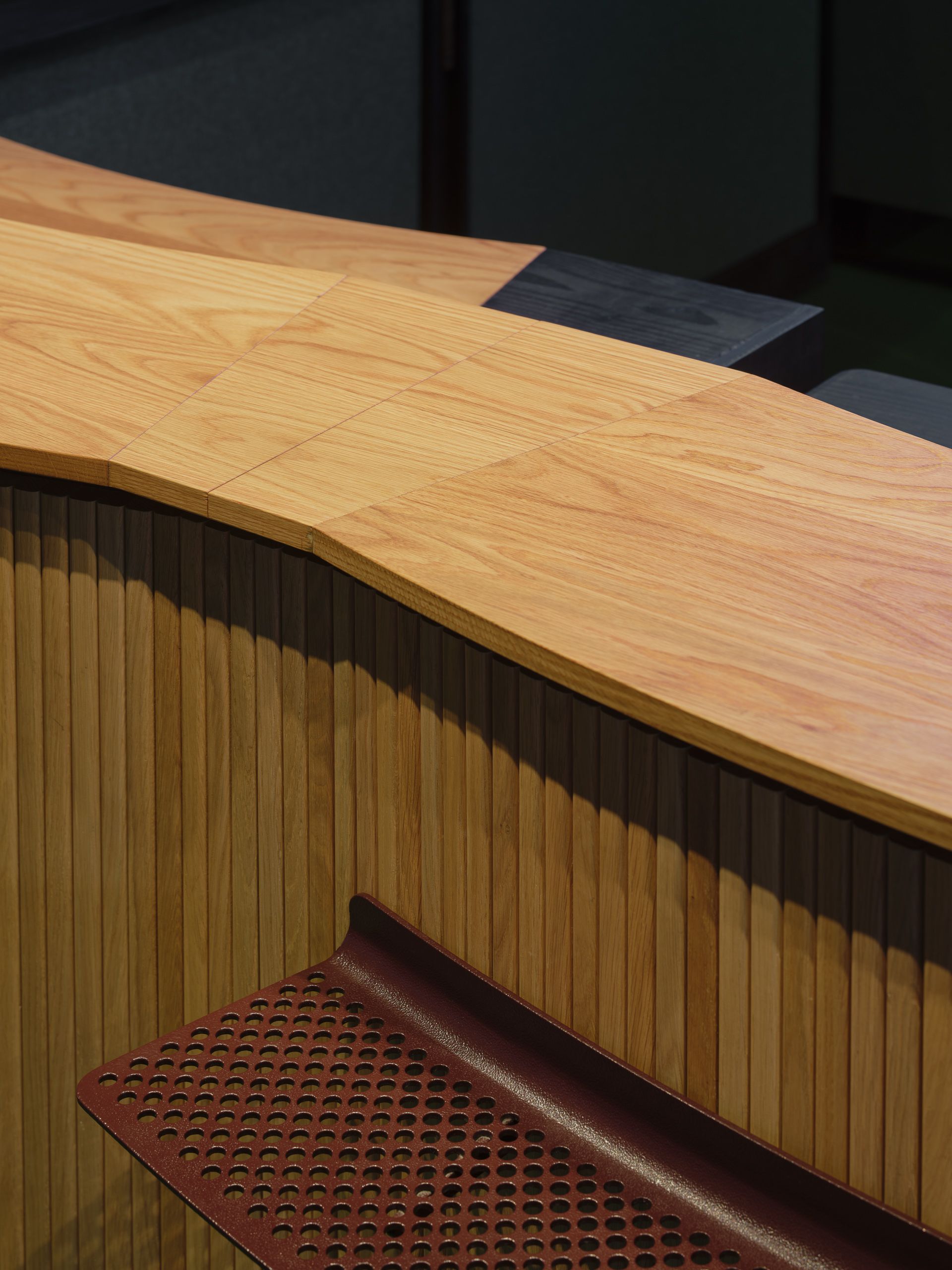
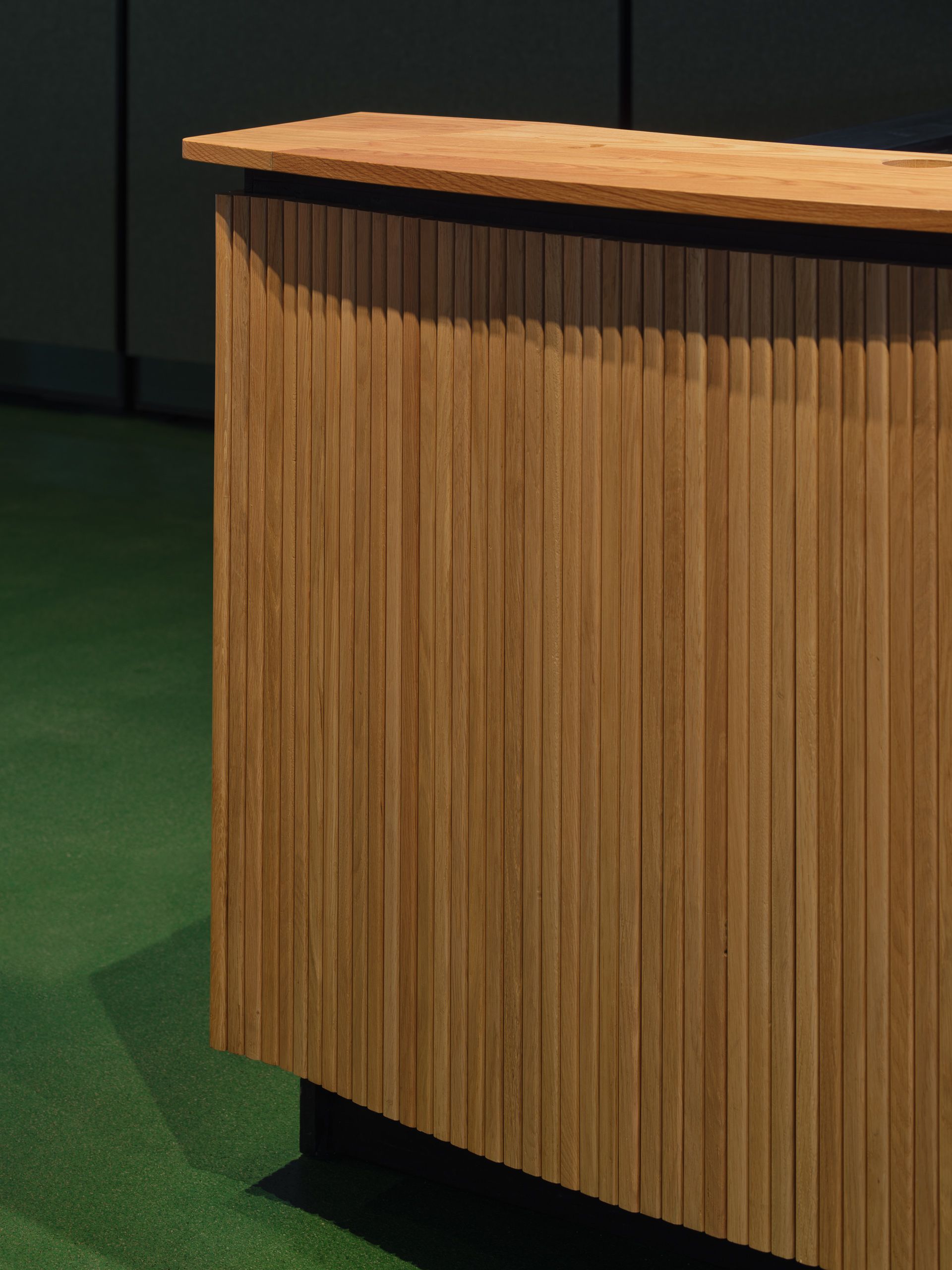
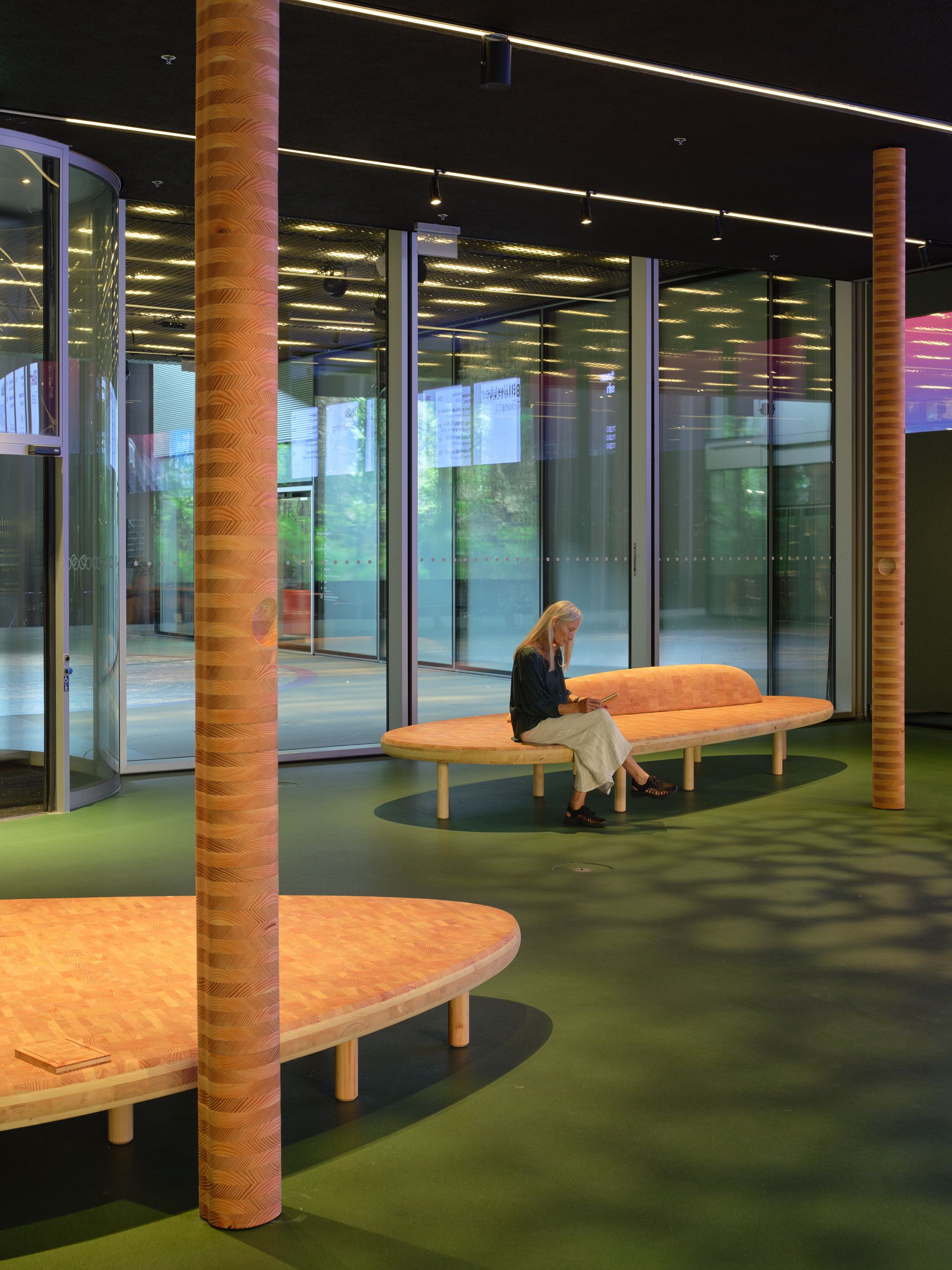
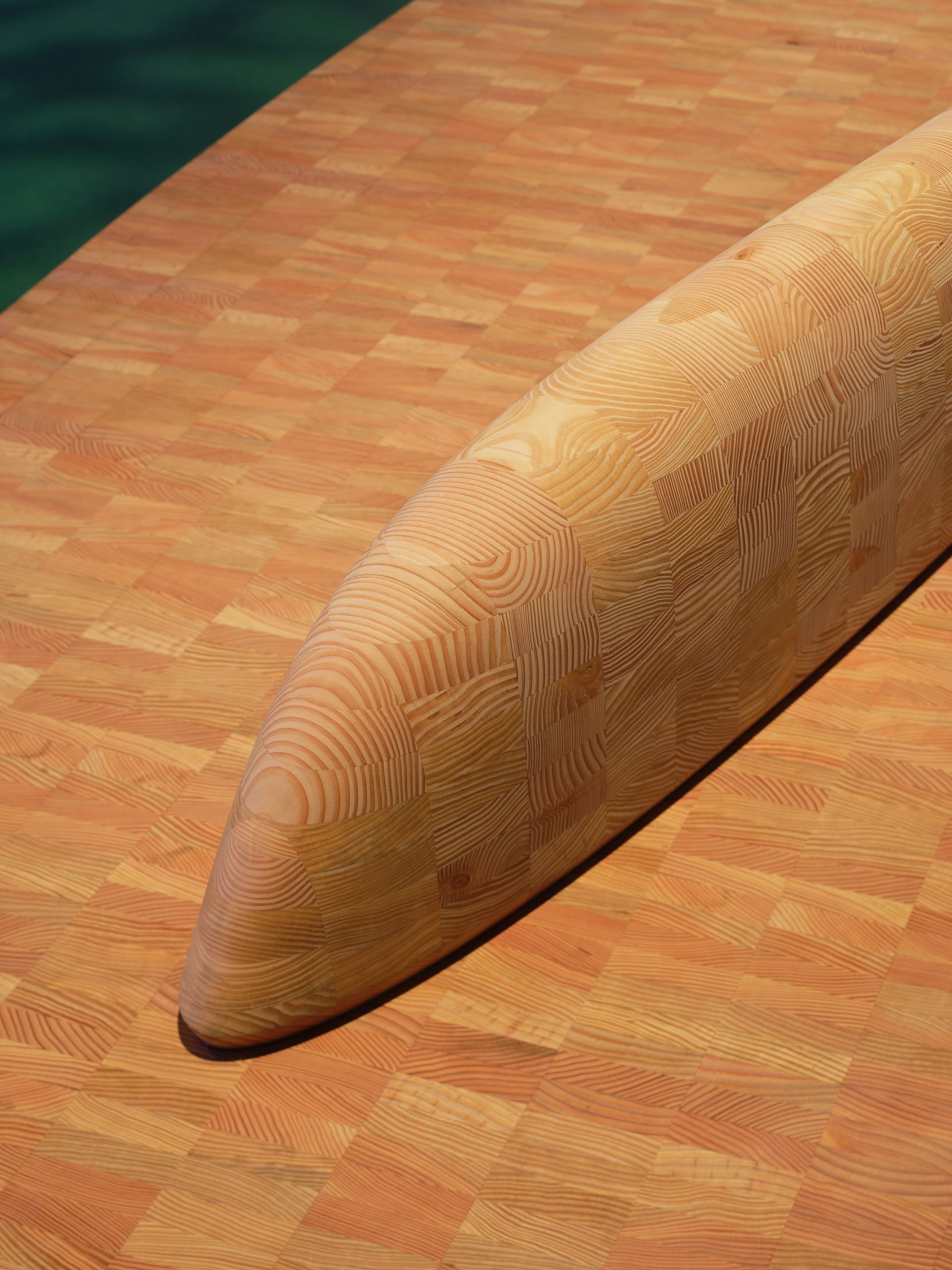
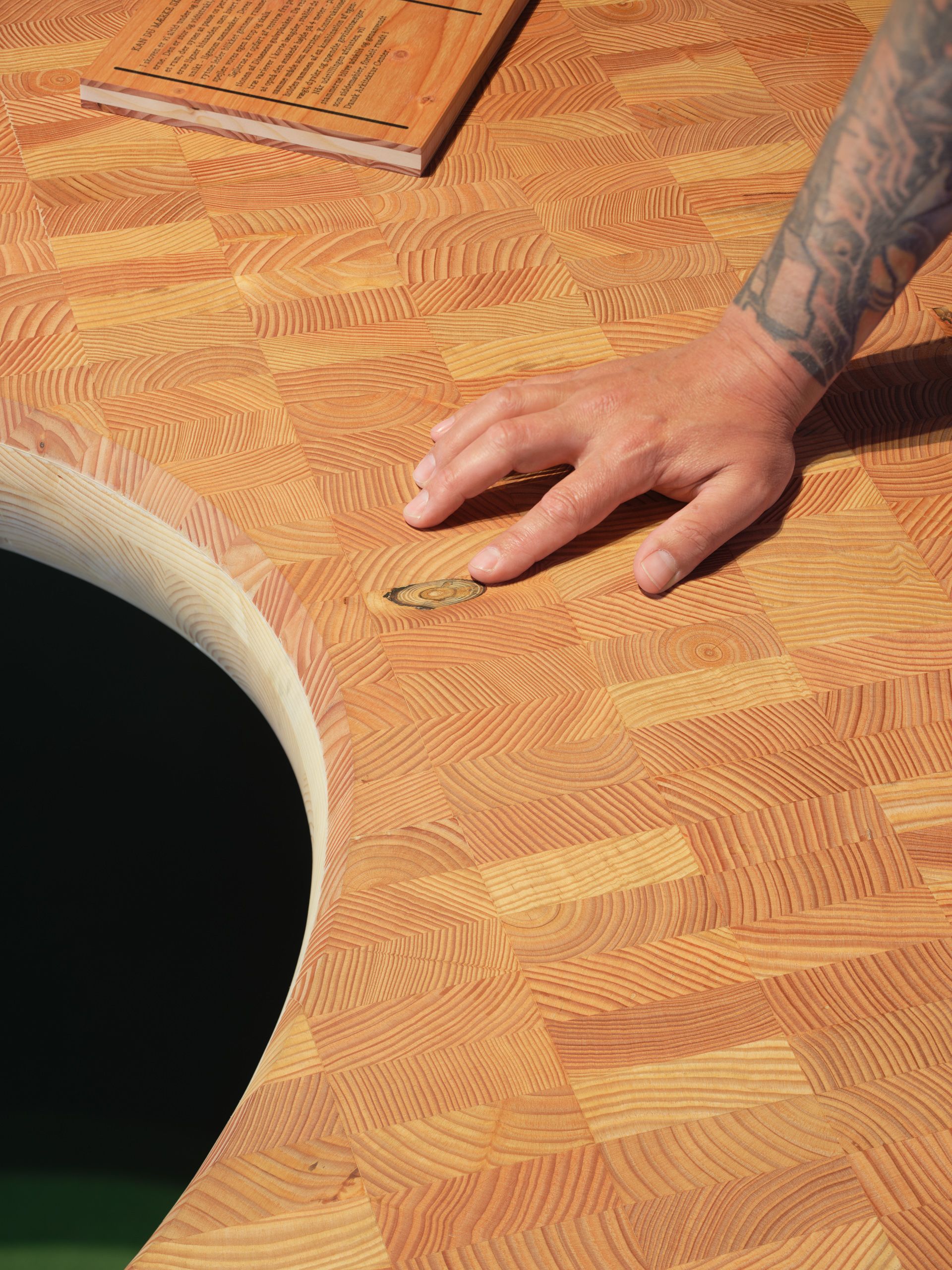
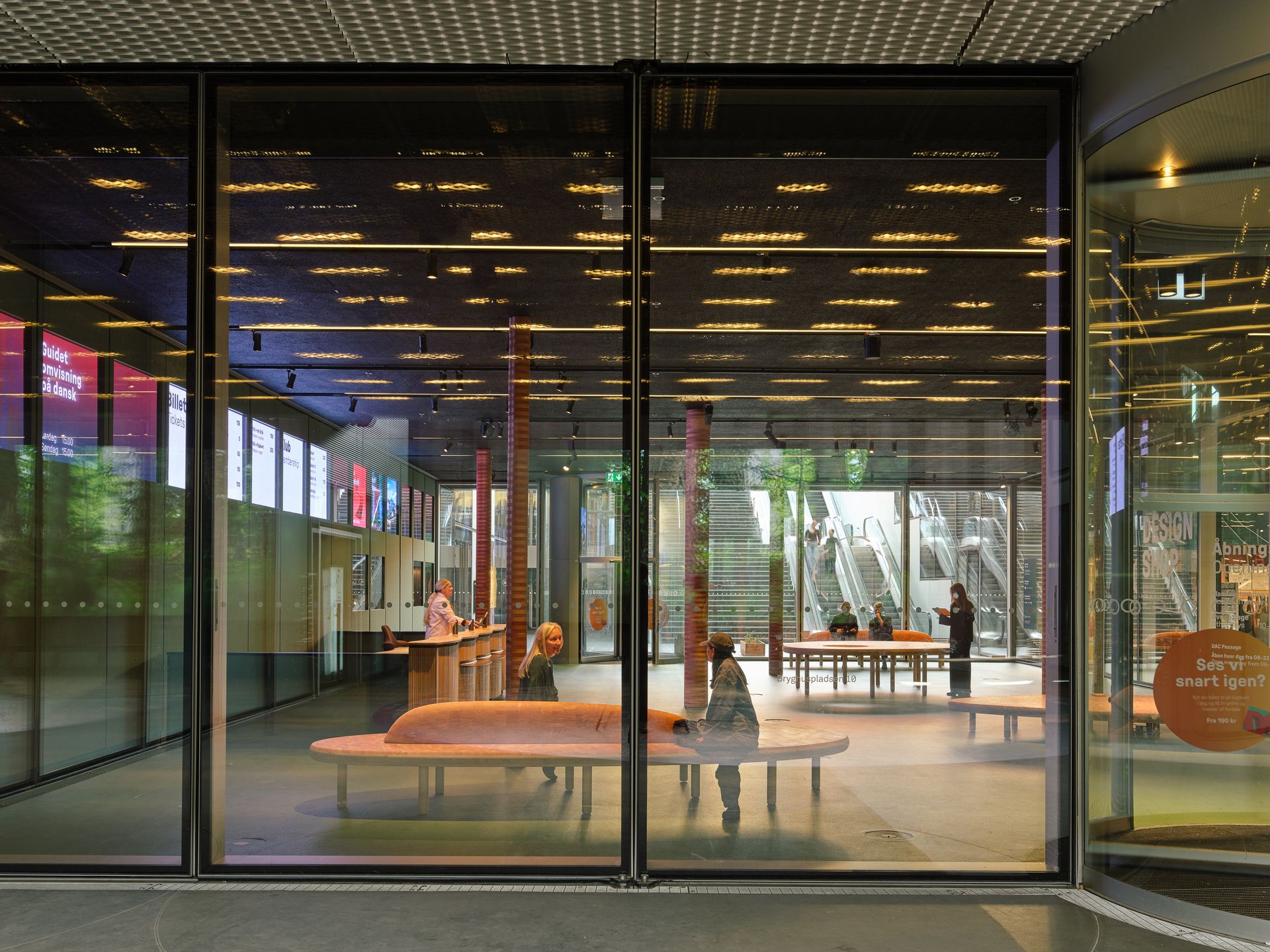
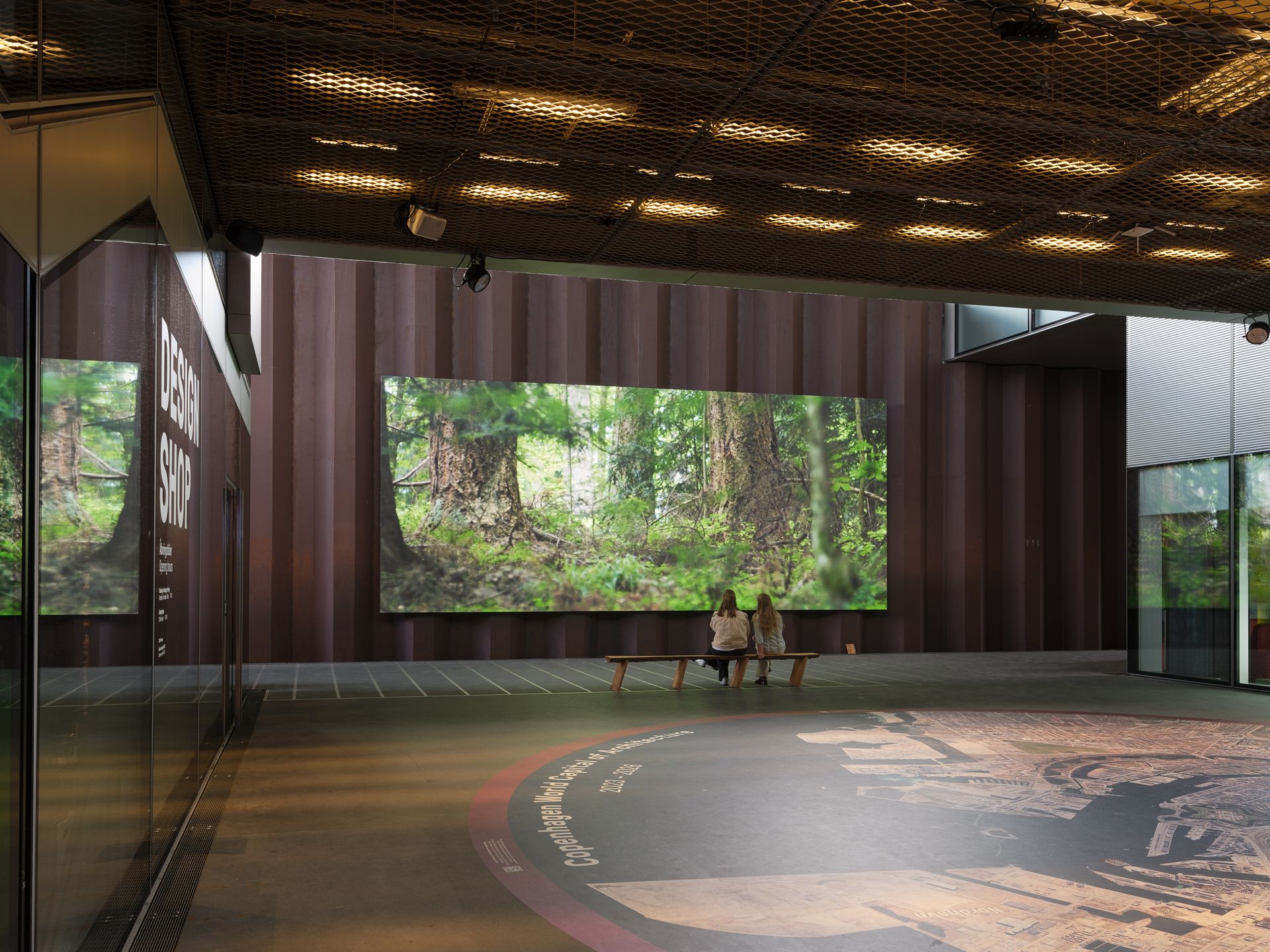
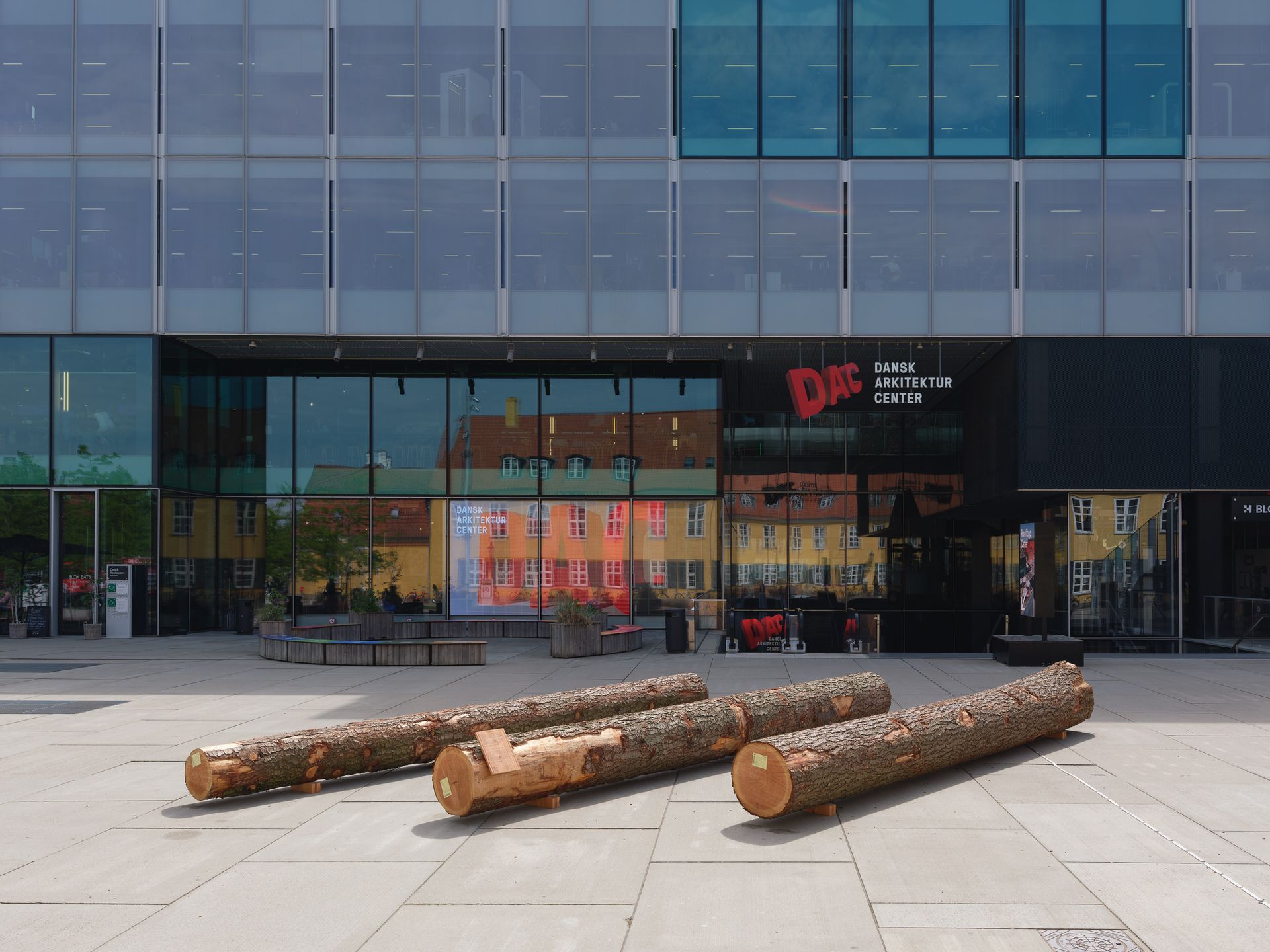
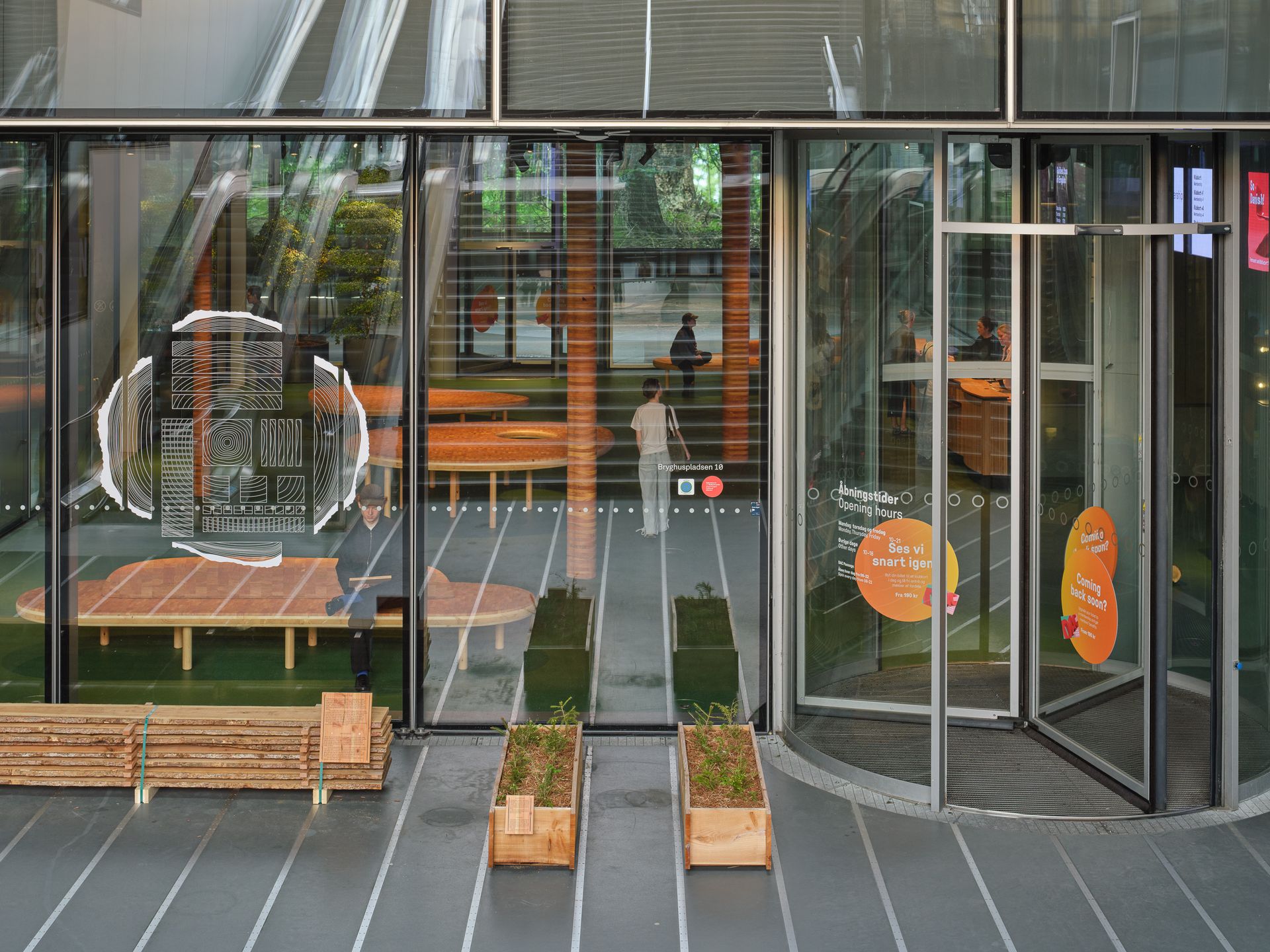
A light transformation of the Danish Architecture Center's (DAC) Welcome Area turns into a permanent exploration of material processing, sensory perception, and architectural reuse. Archival was commissioned to carry out a light transformation of the DAC's Welcome Area along with an exhibition. The spatial design and the exhibition was developed simultainiously offering an opportunity to explore more experiential outcome. A form of installation with a more permanent outlook exploring contempoary craft, materials and sensory experience. This is Not a Forest is a 3 month installation kicked off at 3daysofdesign 2026 in collaboration with DAC and Dinesen Lab. Conceived from the outset as a project with multiple lifecycles, the exhibition became the framework for a lasting interior intervention, allowing temporary structures to evolve into permanent architectural elements. Beyond the experiential, the project examines how architecture mediates our relationship with materials. We are interested in the stages that typically remain hidden: Extraction, processing, fabrication, assembly, maintenance, and reuse. While architecture often presents materials as finished products, we see value in making their transformation legible and allowing traces of these processes to remain present within the built environment. Working primarily with wood, the project explores how heavily processed materials can retain sensory and atmospheric qualities. Rather than reproducing nature, the intervention borrows spatial principles often associated with landscapes – verticality, repetition, density, and filtered light – to investigate how architecture constructs perception through matter. The light transformation consists of three interconnected interior elements. A series of seating platforms establishes a tactile ground condition across the Welcome Area, encouraging physical engagement with the material. Vertical columns organise the space through rhythm, light, and scent, creating an atmospheric framework that heightens awareness of sight and smell. Together, these elements introduce a sensory dimension to the entrance hall while remaining rooted in the realities of industrial production and fabrication. Alongside these interventions, Archival designed a new reception desk through upcycling DAC’s existing counter. Rather than replacing the original element, the project sought to extend its lifespan through adaptation and reuse. This approach reflects a broader interest in working with what already exists and treating materials and components as resources with the potential for multiple futures. A central ambition of the project was to challenge conventional notions of value within material production. Many of the components were developed from residual and overlooked materials, exploring how by-products can become primary architectural elements. By foregrounding processing rather than concealing it, the project seeks to cultivate a greater awareness of the time, labour, and decisions embedded within the materials that shape our surroundings. For Archival, sustainability is not only a question of material selection but of building longer relationships between people, spaces, and resources. The transformation of DAC’s Welcome Area explores how temporary architecture can be designed for continuation, adaptation, and future reuse, allowing materials to accumulate meaning across multiple lives.